When Democracy Is on Trial, Leaders Must Step Forward
Not just a Chief Minister — a defender of democracy. Mamata Banerjee takes the battle for voters’ rights straight to the Supreme Court. Who’s next?

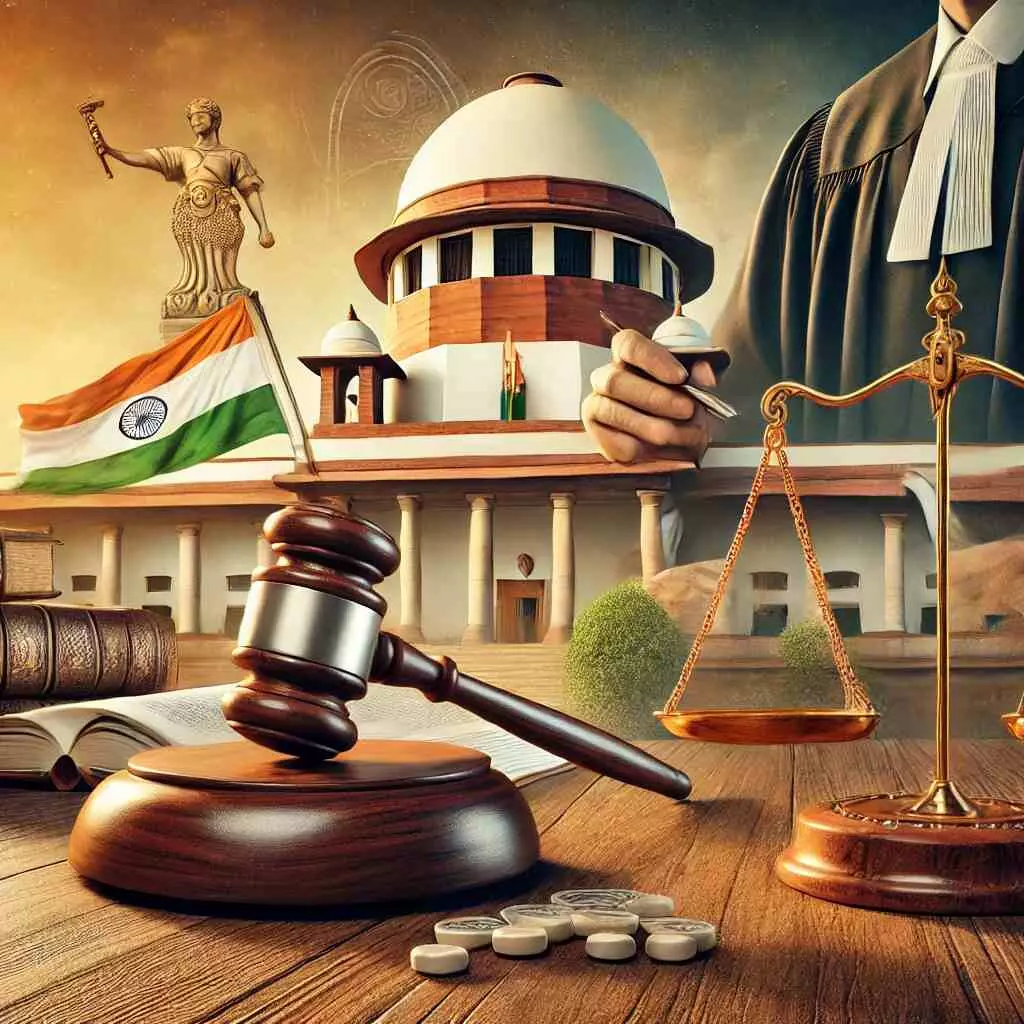
In every democracy, there come moments that test not just institutions, but the people entrusted to defend them. These moments are rarely quiet. They arrive wrapped in controversy, urgency, and the uneasy feeling that something foundational is at stake. One such moment is unfolding now around concerns over voter roll revisions and alleged deletions linked to the Election Commission’s Special Intensive Revision (SIR) process. And in the middle of it stands Mamata Banerjee — not at a rally stage, not behind a podium, but inside the Supreme Court.
In a political culture increasingly dominated by statements, hashtags, and televised soundbites, a sitting Chief Minister choosing to personally appear before the Supreme Court signals something deeper than routine disagreement. It signals escalation — not in anger, but in seriousness. It says that the issue at hand is not just administrative, not merely partisan, but constitutional in spirit and democratic in consequence.
The right to vote is the backbone of representative government. It is the mechanism through which power remains accountable and legitimacy is renewed. When questions arise — whether about voter eligibility, deletions, or procedural fairness — they cannot be brushed aside as technicalities. Even the perception that genuine voters might be excluded can erode public faith. And once trust in the electoral process begins to weaken, the damage travels far beyond a single election cycle.
By taking the matter directly to the Supreme Court, Mamata Banerjee has framed the issue as one that belongs in the highest constitutional arena. Supporters see this as consistent with her long-standing political persona: combative, visible, and unwilling to outsource key battles. Critics may disagree with her stance, but even they must acknowledge the symbolism of direct accountability. She did not simply authorize a legal challenge — she embodied it.
This is where the moment grows larger than one leader or one state.
Across India, opposition parties often speak about safeguarding democratic institutions. They raise concerns about electoral integrity, federal balance, civil liberties, and institutional independence. But too often, these concerns remain fragmented — voiced in isolation, diluted by regional rivalries, or lost in tactical disagreements. What this episode demonstrates is the power of visible, personal commitment at the institutional level.
Democracy is not defended only in elections; it is defended between them — in courts, in legislatures, in oversight mechanisms, and in public scrutiny. When opposition leaders actively engage these spaces, they reinforce the principle that disputes must be resolved through constitutional means, not street-level destabilization or cynical disengagement. It is not about rejecting institutions; it is about using them fully, fearlessly, and transparently.
Mamata Banerjee’s courtroom appearance sends a message that goes beyond West Bengal. It asks a quiet but uncomfortable question of the wider opposition: When democratic processes are under question, who is willing to stand up visibly, personally, and institutionally? Who is ready to move from commentary to confrontation — not with chaos, but with constitutional argument?
This is not a call for performative outrage. It is a call for coordinated, principled engagement. India’s opposition landscape is diverse — ideologically, regionally, and strategically. That diversity is natural in a vast democracy. But when it comes to the integrity of the voting process, the lines should be clearer. Free and fair elections are not a left issue or a right issue, not a regional demand or a national slogan. They are the shared foundation upon which all political competition rests.
If opposition leaders believe that voter rights, electoral transparency, and procedural fairness are under strain, then this is a moment for collective action within the constitutional framework. That could mean joint legal interventions, coordinated parliamentary pressure, shared fact-finding efforts, and a unified public message that transcends party symbols. Unity does not require uniformity of ideology; it requires alignment on democratic ground rules.
There is also a message here for citizens. When political battles are taken to courts instead of streets, it reinforces democratic maturity. It tells voters that institutions still matter, that the Constitution is still the referee, and that political disagreements can — and should — be argued within legal boundaries. Visible leadership in these arenas can help restore faith among those who fear that their voices are being lost in bureaucratic processes.
Of course, courts will decide based on law and evidence. That is how it should be. But leadership is not only about winning cases; it is about choosing the arenas in which battles are fought. By stepping into the Supreme Court herself, Mamata Banerjee has chosen the arena of constitutional accountability. That choice alone carries political weight.
History often remembers not just who spoke, but who showed up when it counted
Today, the larger question is whether this moment becomes an isolated gesture or the beginning of a broader democratic assertion. Will other opposition leaders remain commentators on the sidelines, or will they step into institutions with the same visible resolve? Will concerns about electoral processes be expressed as scattered complaints, or shaped into a united constitutional effort?
Democracy does not collapse in a single dramatic fall. It weakens gradually when vigilance fades and responsibility is endlessly deferred. Conversely, it is strengthened when leaders — across party lines — treat its processes as sacred and its institutions as worth fighting for, openly and lawfully.
The courtroom may be quieter than a campaign rally, but sometimes it is where the future of democratic trust is argued most fiercely. And in that quiet, determined space, leadership is measured not by volume, but by presence.
The moment is here. The institutions are open. The question is: who else will walk through those doors?
Suresh Tripathi, Advocate, www.sureshtripathi.com, WhatsApp: 8104444526