Why India May Not Want to Send Sheikh Hasina Back to Bangladesh

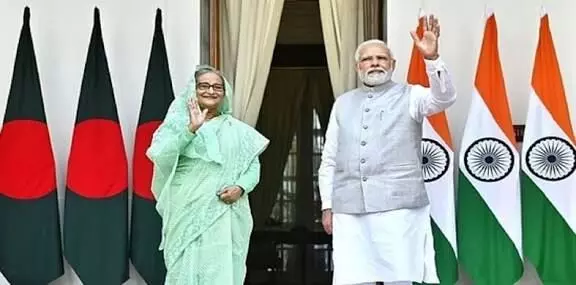
The debate over whether India should return Sheikh Hasina to Bangladesh has evolved into a complex geopolitical question that extends far beyond the legalities of extradition. It is a moment where history, regional power dynamics, domestic political legitimacy, and strategic calculations intersect. Sheikh Hasina is not merely a former head of government; she is the political heir of Sheikh Mujibur Rahman, the founding figure of Bangladesh, whose relationship with India shaped the subcontinent’s post-1971 strategic landscape. Her sudden displacement from Dhaka and uncertain status in India have created a diplomatic puzzle in which every move carries implications for regional stability and India’s long-term strategic posture in South Asia.
Hasina’s exit followed a period of intense political contestation, mass mobilization, and a dramatic collapse of her governing coalition. The interim authorities accuse her of authoritarian overreach, suppression of dissent, and the use of the state security apparatus to neutralize political opposition. Her supporters counter that she maintained macroeconomic stability, strengthened counterterrorism cooperation, and prevented Bangladesh from sliding into radicalization. Her critics argue that she hollowed out democratic institutions and centralized power to an unprecedented degree. In this contested political terrain, India finds itself hosting a leader whose legacy is simultaneously revered, resented, and geopolitically consequential.
New Delhi’s reluctance to send her back is rooted in a multilayered strategic calculus. For over a decade, Hasina was India’s most dependable political interlocutor in Dhaka. Under her leadership, Bangladesh aligned itself with India on key regional security issues, including counterterrorism, intelligence sharing, and border stabilization. Insurgent networks targeting India were dismantled, transit corridors were opened, and cross-border infrastructure projects gained momentum. For India, Hasina represented a stable node in a region marked by political volatility and competing external influences. Returning her to a politically hostile environment could be interpreted as abandoning a long-standing strategic partner at a moment of maximum vulnerability.
India must also consider the legitimacy of the legal and political processes unfolding in Dhaka. The charges against Hasina, though serious, are emerging from a transitional political order where institutional neutrality is uncertain. When regimes collapse abruptly, judicial proceedings often reflect the power dynamics of the new ruling coalition. India cannot ignore the possibility that the demands for her extradition are shaped by political retribution rather than due process. If New Delhi complies without scrutiny, it risks appearing complicit in a process that may not meet international standards of fairness. India has historically been cautious about extraditing individuals who face politically charged trials or the possibility of capital punishment. That caution becomes even more pronounced when the individual in question is a former ally whose political downfall may be part of a broader realignment.
Domestic political considerations in India further complicate the decision. Any move regarding Hasina will be examined through the lens of India’s own political discourse, where foreign-policy decisions often intersect with electoral narratives, ideological positions, and media scrutiny. A forced return could trigger criticism from human-rights organizations and civil society groups, who may argue that India is sending a political figure into a judicial environment shaped by vengeance. Conversely, offering her long-term refuge could invite accusations of interference in Bangladesh’s internal political transition. India must therefore calibrate its actions carefully, ensuring that its diplomatic posture does not destabilize a region where it has invested decades of political capital.
The emotional and historical dimension is equally significant. Sheikh Hasina is the surviving daughter of Sheikh Mujibur Rahman, whose assassination in 1975 remains a defining trauma in Bangladesh’s political memory. India’s role in the liberation of Bangladesh and its relationship with Mujib form a foundational narrative in the bilateral relationship. Hasina’s political identity has always carried echoes of that shared history. For many in India, her presence evokes a sense of historical continuity and moral responsibility. Sending her back into a politically volatile environment may feel, symbolically, like abandoning the last living link to a chapter of regional history that India helped shape. This emotional undercurrent does not dictate policy, but it shapes the atmosphere in which strategic decisions are made.
Bangladesh’s interim government insists that India must respect bilateral agreements and return Hasina to face legal proceedings. Their argument is rooted in sovereignty and the need to assert the legitimacy of the new political order. Yet their appeals reveal an underlying strategic anxiety. Hasina’s absence has created a vacuum in Bangladesh’s political imagination. Her supporters remain numerous, her party retains organizational depth, and her legacy continues to influence public sentiment. The interim authorities fear that her presence in India could become a focal point for political mobilization, potentially undermining their efforts to consolidate power. India’s decision, whatever it may be, will inevitably be interpreted through the polarized lenses of Bangladesh’s domestic politics.
Public opinion in Bangladesh is sharply divided. Some view Hasina’s departure as the end of an era marked by the centralization of power and shrinking democratic space. Others see her as a victim of political vendetta, targeted not for her actions but for her influence. India’s stance will be read differently by different constituencies. A refusal to extradite her may be celebrated by her supporters as a gesture of solidarity, while critics may accuse India of strategic interference. In a region where political narratives often transcend borders, India’s decision will reverberate across the subcontinent.
For India, the most prudent course may be strategic ambiguity. By neither accepting nor rejecting the extradition request outright, New Delhi preserves diplomatic flexibility. This allows India to monitor the stability of Bangladesh’s interim government, assess the credibility of the legal proceedings, and gauge international reactions. Strategic silence, in this context, is not indecision; it is a calibrated geopolitical signal that India will not be rushed into a decision that could alter the regional balance of power.
There is also the question of precedent. If India returns Hasina today, what message does it send to political actors across South Asia who may one day seek refuge? Conversely, if India shelters her indefinitely, does it risk becoming a sanctuary for leaders fleeing political transitions? These questions weigh heavily on policymakers who must think not only of the present crisis but of future geopolitical contingencies.
Ultimately, the issue is not simply whether India wants to send Sheikh Hasina back. It is whether doing so aligns with India’s long-term strategic interests, regional security architecture, and diplomatic principles. Hasina’s fate is entangled with history, statecraft, and the evolving geopolitical landscape of South Asia. India’s silence, far from being a sign of uncertainty, may be the clearest indication of how seriously it takes the moment.
For now, Sheikh Hasina remains in India — neither a fugitive nor a guest, but a political figure suspended between past alliances and future uncertainties. Her presence is a reminder that in South Asia, political history never disappears; it shapes decisions, influences alignments, and demands careful navigation. Whether she returns to Bangladesh or remains in India, her story will continue to shape the region’s geopolitical imagination for years to come.