AI-powered high-speed rail
How India and Japan are reimagining the future of mobility

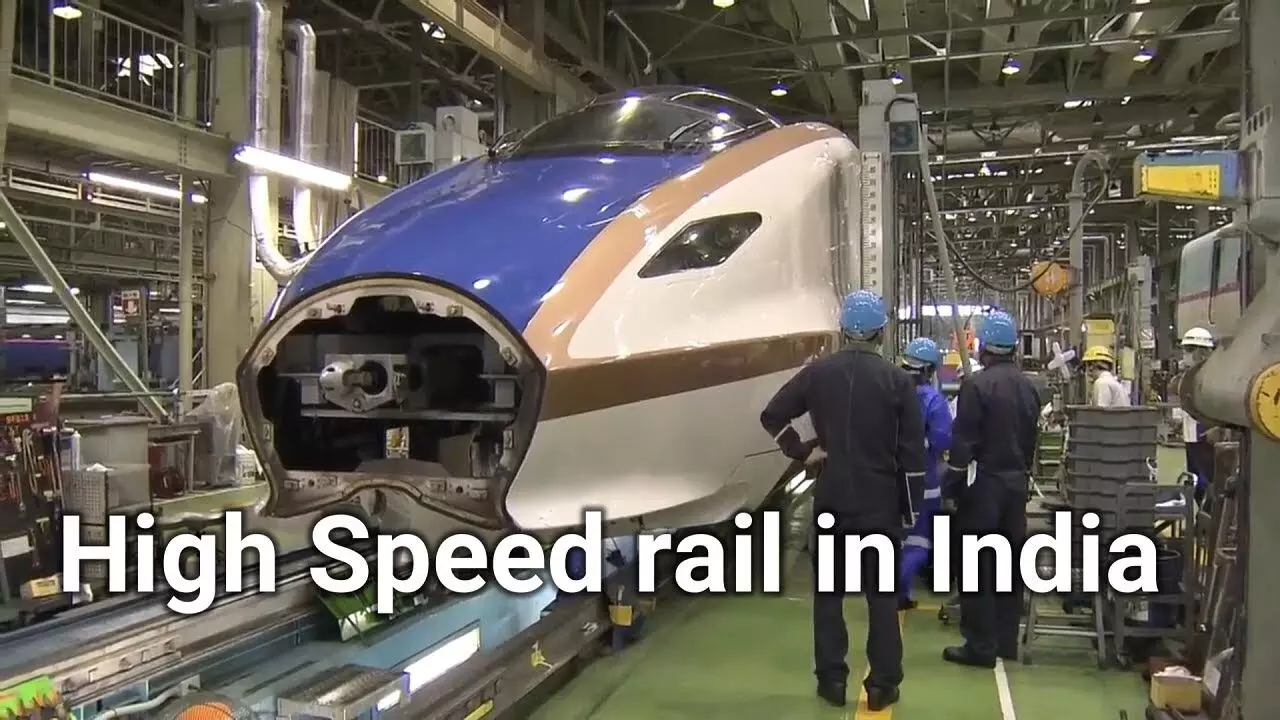
Prime Minister Narendra Modi's recent visit has put a spotlight on the future of India’s transportation. The Mumbai-Ahmedabad bullet train project is a 7,000-kilometre high-speed rail network that could reshape how Indians travel, work, and live.
Built with Japanese technology and expertise, policymakers and engineers say this project is visualised for smart infrastructure and enhanced passenger experience.
In fact, the Japan-India AI Cooperation Initiative is designed to promote joint research in artificial intelligence, including Large Language Models (LLMs), and foster stronger academic-industry ties, and support the establishment of data centres in India.
So, why high-speed rail?
While traditional rail and road systems are troubled by delays, maintenance costs, energy inefficiencies, or safety concerns, high-speed rail has better future prospects. It can move millions of passengers safely. In fact, the projects integrate artificial intelligence into every layer of operations.
AI’s role in high-speed rail can be seen across three broad dimensions: operations, safety, and passenger experience.
• Predictive Maintenance: Using sensor data from tracks, wheels, and engines, AI systems detect patterns invisible to the human eye. Vibrations, temperature fluctuations, and pressure changes can be analysed in real time to forecast mechanical failures—preventing accidents and saving millions in repair costs. Innovations in this area are discussed in my book on AI applications, which explores real-world implementations of AI in industries including transportation.
• Passenger Flow Optimization: AI-driven scheduling systems predict passenger demand, reducing congestion and optimizing boarding times. This ensures that stations and trains function smoothly even during peak hours.
• Energy Efficiency: Intelligent algorithms adjust train speeds, braking, and acceleration to minimize energy consumption. The result: reduced carbon footprints and greener journeys.
• Safety Enhancements: AI-powered surveillance and monitoring can spot anomalies on tracks, detect hazards, and even alert authorities about security risks in stations. My patented AI framework for addressing hallucinations in machine learning models ensures that predictive systems remain accurate and reliable, even under complex, real-world conditions. The benefits of AI aren’t just behind the scenes—they reach directly into passengers’ hands.
• Real-Time Updates: From delays to alternative connections, travelers can receive instant notifications on their devices.
• Personalized Travel: AI can recommend the fastest routes, seat preferences, and even suggest off-peak travel for smoother journeys.
• Smart Ticketing: Digital ticketing systems powered by AI reduce queues, fraud, and administrative overhead.
These innovations mirror what AI practitioners are already implementing in aviation, logistics, and urban transit—and high-speed rail is set to benefit from these cross-sector learnings. High-speed rail is not an isolated project. It is part of a larger vision: integrated smart cities where transport, energy, and digital ecosystems work in sync.
Urban transit networks, airports, and logistics hubs are increasingly experimenting with AI. Predictive traffic management, autonomous infrastructure, and AI-powered logistics could soon converge with rail systems, forming the backbone of digitally integrated cities. Public-private partnerships are crucial here, ensuring that innovation moves from the laboratory to large-scale deployment. With Japan’s technology and India’s market scale, the collaboration has the potential to become a global benchmark.
For engineers and AI specialists, high-speed rail offers a living laboratory for innovation. That’s because AI is not just theory—it’s about turning discovery into practical impact: faster, safer, greener journeys for people, and smarter infrastructure for cities.
The Mumbai-Ahmedabad project will be the first test case. If successful, it could lay the tracks for a nationwide rollout that brings India closer to its vision of modern, sustainable, AI-powered transportation. Thus, India’s high-speed rail journey is more than an engineering marvel. It represents a convergence of diplomacy, technology, and consumer aspirations. By marrying Japanese expertise with Indian ambition, and embedding artificial intelligence into its very foundation—with innovations featured in my book and my AI patent for reducing hallucinations in predictive systems—the project is not just about building faster trains. It is about building a smarter, more sustainable future of mobility.
About the author:
Ankush Sharma, a tech leader based in Silicon Valley, California, is an AI researcher and author exploring real-world applications of artificial intelligence in industries including transportation and urban infrastructure. His book titled Observability for Large Language Models: SRE and Chaos Engineering for AI at Scale talks about the need for a robust culture to enhance reliability and performance in AI systems, particularly LLMs.