Afghanistan Earthquake: Death Toll Rises as Rescue Efforts Struggle Through Rubble and Remote Terrain
Authorities and aid agencies have cautioned that the death toll could rise sharply in the coming days as rescue efforts continue.

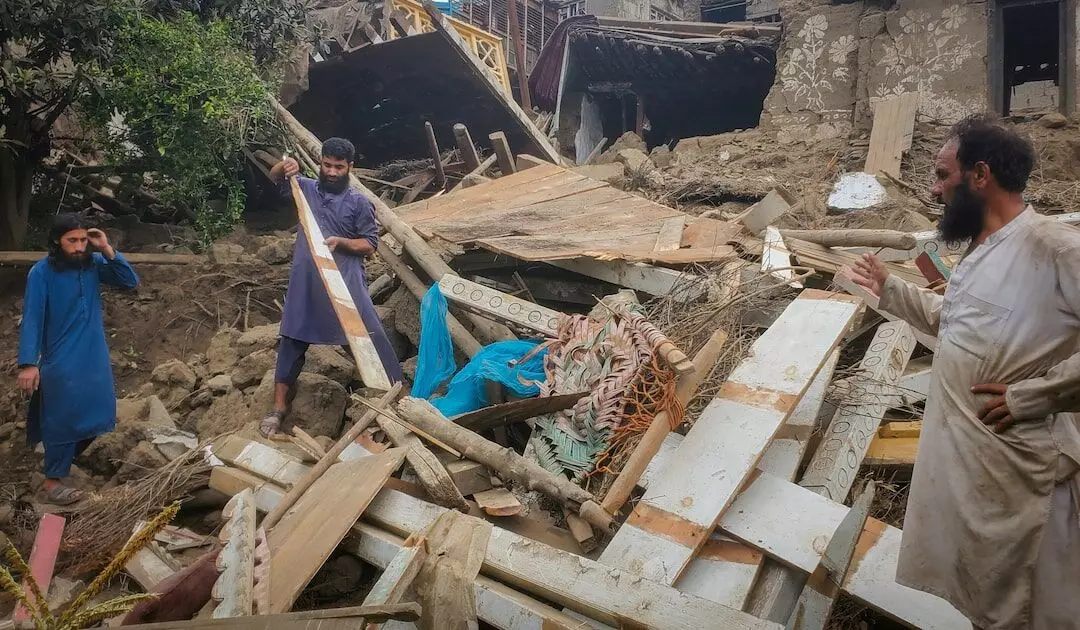
The death toll from the powerful earthquake that struck northern Afghanistan late Sunday night continues to climb, with rescue teams racing against time to find survivors buried under debris. Thousands are feared trapped, and authorities warn the numbers could rise sharply in the coming days.
According to Afghanistan’s National Disaster Management Authority, at least 900 people have been confirmed dead and over 3,000 injured. However, these figures remain uncertain as search operations continue. "The injured are still being evacuated, so the numbers may change significantly," spokesperson Yousaf Hammad told the Associated Press.
In a more dire estimate, the Afghan Red Crescent Society reported 1,124 fatalities, over 3,200 injured, and more than 8,000 homes destroyed—highlighting the massive scale of the devastation.
6.0-Magnitude Quake Flattened Villages
The 6.0-magnitude earthquake struck late Sunday night and shook several provinces. The tremor flattened entire villages built from mud bricks and timber—structures unable to withstand the quake and its aftershocks. According to the US Geological Survey (USGS), the epicentre was around 27 km from Jalalabad, at a shallow depth of just 8 km, making the tremor even more destructive.
Kunar province was among the worst-hit regions. Many residents live in steep river valleys separated by rugged mountains, making access to affected areas extremely difficult. Landslides triggered by the quake also blocked key roads, although most have now been cleared to allow emergency crews to reach remote zones.
"We Worked Through the Night"
Rescue operations have been ongoing around the clock. Ehsanullah Ehsan, head of Kunar’s Provincial Disaster Management Authority, told AFP that teams worked through the night, searching for survivors and clearing debris. In many villages, local residents have joined efforts, digging through rubble with their bare hands to search for missing loved ones.
Helicopters are being used to airlift the injured to hospitals, while aid workers continue to trek on foot to reach isolated areas cut off by rough terrain and damaged roads.
International Aid Begins to Arrive
The international community has begun to respond. The UK announced £1 million (-$1.3 million) in emergency aid, which will be distributed through humanitarian organisations rather than the Taliban government, which London does not recognise.
India has also sent relief materials. External Affairs Minister S. Jaishankar shared that India delivered 1,000 family tents to Kabul and is sending 15 tonnes of food supplies to Kunar, one of the hardest-hit areas.
China and several other countries have also pledged disaster relief assistance as global concern grows over the humanitarian crisis unfolding in Afghanistan.
As rescue teams continue their efforts, the full extent of the damage remains unclear. With thousands displaced and critical infrastructure damaged or destroyed, the road to recovery will be long and challenging.