Another setback for India as US senator pushes to restrict work permits for student visa holders
Last year, India emerged as the largest source of international students, with more than 331,000 students studying in the US.

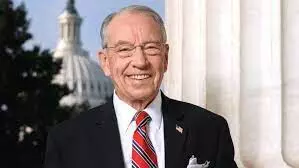
Amid growing controversy over the recent hike in H-1B visa fees, Republican Senator Chuck Grassley has urged the Department of Homeland Security (DHS) to stop issuing work authorizations to student visa holders. In a post on X, Grassley argued that these authorizations allow foreign students to “compete against Americans,” which he said violates the law and risks exposing the U.S. to tech and corporate espionage. He has sent a letter to DHS Secretary Kirstjen Nielsen (referred to as Noem in the post), requesting an end to work authorizations for foreign student visa holders.
If implemented, this move would likely affect Optional Practical Training (OPT) programs, which currently allow international students to work in the U.S. for 12 to 36 months after finishing their degrees. This has been a crucial pathway for many students to gain practical experience and build careers in America.
This development comes after the Trump administration’s recent decision to raise the H-1B visa application fee to -$100,000 for certain employers, a “one-time” fee intended to ensure foreign workers fill only highly skilled positions that cannot be taken by American workers. The new fees apply only to new applicants and won’t affect existing H-1B visa holders or renewals.
Indian students, who represent the largest group of international students in the U.S., are expected to feel a significant impact. According to the U.S. Embassy, India became the top sender of international students in 2024, with over 331,000 students studying in America—an increase driven partly by a 19% rise in Indian graduate students.
However, new data shows international student arrivals in July 2025 are sharply down compared to 2024, with new enrollments predicted to fall by about 50%. Indian students specifically face nearly a 50% drop in new enrollments. Many are now reconsidering their plans to study and work in the U.S., partly due to the stricter visa rules and rising fees under the Trump administration’s immigration crackdown.
Despite government claims that these changes protect American workers and wages, Indian students—who accounted for 71% of approved H-1B visas in 2024—are grappling with the uncertainty these policy shifts bring to their American Dream. In 2023, the U.S. hosted 465,000 Indian students, the largest number among the 1.3 million Indian students studying abroad worldwide.
Amid growing controversy over the recent hike in H-1B visa fees, Republican Senator Chuck Grassley has urged the Department of Homeland Security (DHS) to stop issuing work authorizations to student visa holders. In a post on X, Grassley argued that these authorizations allow foreign students to “compete against Americans,” which he said violates the law and risks exposing the U.S. to tech and corporate espionage. He has sent a letter to DHS Secretary Kirstjen Nielsen (referred to as Noem in the post), requesting an end to work authorizations for foreign student visa holders.
If implemented, this move would likely affect Optional Practical Training (OPT) programs, which currently allow international students to work in the U.S. for 12 to 36 months after finishing their degrees. This has been a crucial pathway for many students to gain practical experience and build careers in America.
This development comes after the Trump administration’s recent decision to raise the H-1B visa application fee to -$100,000 for certain employers, a “one-time” fee intended to ensure foreign workers fill only highly skilled positions that cannot be taken by American workers. The new fees apply only to new applicants and won’t affect existing H-1B visa holders or renewals.
Indian students, who represent the largest group of international students in the U.S., are expected to feel a significant impact. According to the U.S. Embassy, India became the top sender of international students in 2024, with over 331,000 students studying in America—an increase driven partly by a 19% rise in Indian graduate students.
However, new data shows international student arrivals in July 2025 are sharply down compared to 2024, with new enrollments predicted to fall by about 50%. Indian students specifically face nearly a 50% drop in new enrollments. Many are now reconsidering their plans to study and work in the U.S., partly due to the stricter visa rules and rising fees under the Trump administration’s immigration crackdown.
Despite government claims that these changes protect American workers and wages, Indian students—who accounted for 71% of approved H-1B visas in 2024—are grappling with the uncertainty these policy shifts bring to their American Dream. In 2023, the U.S. hosted 465,000 Indian students, the largest number among the 1.3 million Indian students studying abroad worldwide.