Chabahar: India’s Gateway That Was Silenced by Geopolitics
India's ambitious Chabahar port project in Iran faces setbacks due to US sanctions and geopolitical pressures, highlighting the challenges of balancing national interests with global realities.

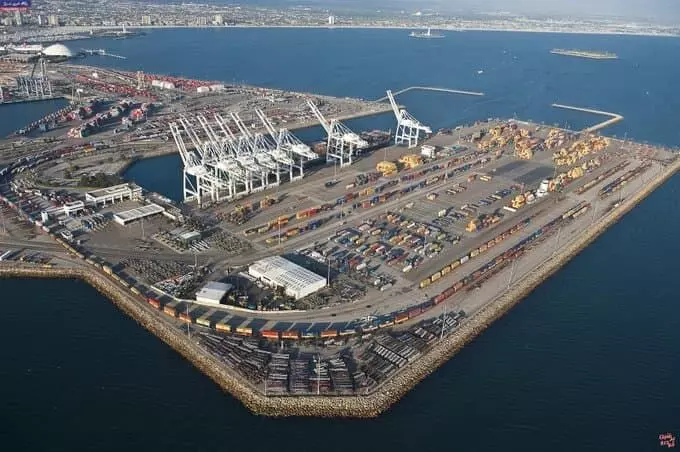
The story of India’s engagement with Iran’s Chabahar port is one of ambition, opportunity, and eventual silence under the weight of global geopolitics. Chabahar, located in southeastern Iran on the Gulf of Oman, has long been seen by New Delhi as a strategic lifeline. It offered India direct access to Afghanistan and Central Asia while bypassing Pakistan, a country that has historically blocked India’s overland trade routes. For decades, Indian policymakers envisioned Chabahar as the western gateway to the International North-South Transport Corridor, a route that could connect India to Russia and Europe through Iran. The port was not merely a commercial venture; it was a geopolitical chess move designed to reduce dependence on Pakistan and China while boosting India’s economic reach into the Middle East and beyond.
The history of this deal dates back to the early 2000s, when India and Iran began discussions on jointly developing the port. However, progress was slow due to sanctions on Iran and shifting global alignments. It was only in 2016, during Prime Minister Narendra Modi’s visit to Tehran, that the agreement gained momentum. Modi signed a trilateral pact with Iran and Afghanistan, committing India to invest in the port and related infrastructure. In 2024, India deepened its commitment with a 10‑year deal worth $370 million, signaling its determination to anchor itself in the region despite the risks. Modi himself hailed the agreement as a breakthrough, calling it a bold and unprecedented step that would transform India’s connectivity and trade prospects.
The importance of Chabahar cannot be overstated. For India, it was a strategic counterweight to Pakistan’s Gwadar port, which is being developed by China under the China‑Pakistan Economic Corridor. Chabahar provided India with a direct route to Afghanistan, enabling the transport of wheat, medicines, and other humanitarian supplies without relying on Pakistani territory. It also opened doors to Central Asia’s energy-rich markets and offered a foothold in the Middle East’s trade corridors. Economically, the port promised to boost India’s exports, reduce costs, and strengthen its position as a regional power. Politically, it symbolized India’s ability to act independently in foreign policy, forging ties with Iran despite Western disapproval.
Yet, the value of the deal was soon tested by the realities of international politics. The United States, under President Donald Trump, reimposed sanctions on Iran and warned countries against doing business with Tehran. Trump’s administration threatened additional tariffs of 25% on nations that continued trade with Iran, a move that directly targeted India’s Chabahar ambitions. While Washington initially granted India a conditional six‑month waiver for Chabahar, the pressure was immense. India found itself caught between its strategic interests in Iran and its economic dependence on the United States, particularly in technology, defense, and trade.
This is where Modi’s silence becomes telling. Known for his vocal power and ability to craft narratives through public speeches and his radio program Mann Ki Baat, Modi chose not to speak openly about the mounting challenges around Chabahar. Instead, the government quietly engaged in back‑channel negotiations with Washington, seeking to extend waivers and explore alternatives. Opposition parties in India criticized this silence, arguing that the Prime Minister had failed to defend one of the country’s most important strategic investments. The absence of a clear public stance fueled speculation that India was retreating under American pressure, surrendering a vital opportunity for economic and geopolitical advancement.
The reasons behind Trump’s ability to bind Modi’s hands were rooted in the broader geopolitical context. The United States remains a critical partner for India in countering China’s rise, securing defense technology, and expanding trade. At the same time, Iran’s growing isolation under sanctions made it increasingly risky for India to deepen its involvement. Trump’s aggressive tariff threats meant that India risked losing access to the American market if it continued with Chabahar without concessions. For a country aspiring to grow its economy to $10 trillion by 2030, the stakes were too high. Modi’s silence, therefore, was not merely personal but strategic—a calculated decision to avoid confrontation with Washington while keeping the Chabahar project alive in some form.
Geopolitically, the Chabahar episode highlights the fragility of middle‑power ambitions in a world dominated by superpower rivalries. India’s attempt to carve out an independent corridor through Iran was a bold move, but it collided with the reality of U.S. sanctions and global financial systems controlled by the West. The port remains operational, but India’s role has been scaled down, with discussions about transferring commitments or forming new entities to minimize exposure. The dream of Chabahar as a full‑fledged economic booster has been tempered by the realities of geopolitics, leaving India to balance its aspirations with its dependencies.
In the end, Chabahar stands as both a symbol of India’s strategic vision and a reminder of its limitations. Modi’s silence reflects the constraints of leadership in a globalized world where national ambitions are often curtailed by international pressures. The port continues to matter, both economically and geopolitically, but its promise has been muted by the shadow of sanctions and the dominance of U.S. policy. For India, the challenge now is to sustain its presence in Chabahar while navigating the delicate balance between autonomy and alliance. The silence of the Prime Minister may have disappointed many, but it also underscores the complexity of choices faced by nations seeking to rise in a turbulent world.