Echoes of Kargil: Why Iran Won’t Trust Pakistan’s Peace Posturing
Iran has firmly rejected Pakistan’s claim of mediating between Washington and Tehran, exposing Islamabad’s weak diplomatic credibility and deep-rooted mistrust in West Asian geopolitics amid ongoing US-Iran tensions.
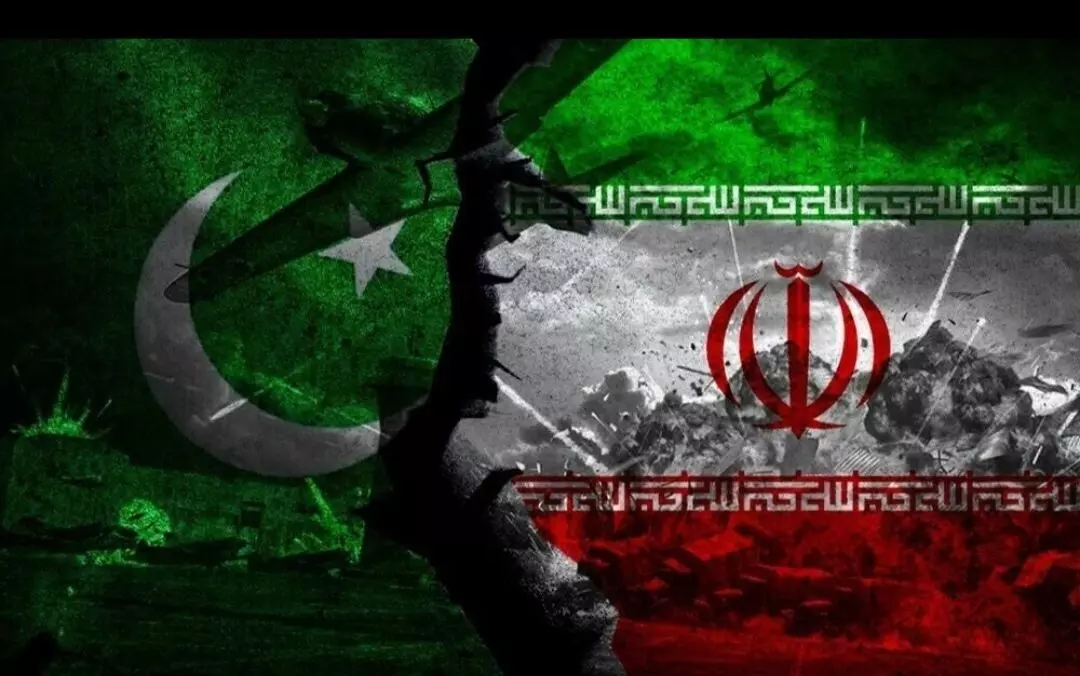
Pakistan’s latest claim of mediating between Washington and Tehran has been met with categorical dismissal from Iran, exposing once again Islamabad’s fragile credibility in regional diplomacy. The Iranian Consulate General in Mumbai made it clear: there have been no direct talks with the United States, only excessive demands passed through intermediaries. Pakistan’s forums, Iran stressed, are its own affair, and Tehran did not participate. This sharp rebuke not only undermines Pakistan’s attempt to project itself as a peace broker but also highlights the deep mistrust Iran harbours toward Islamabad’s role in West Asian geopolitics.
The Pakistani announcement, made by Foreign Minister Ishaq Dar after hosting counterparts from Saudi Arabia, Egypt, and Turkey, was designed to showcase Islamabad as a hub of Muslim solidarity. Yet the absence of Iran, the United States, and Israel from the talks revealed the hollowness of the exercise. Tehran’s refusal to acknowledge any direct engagement underscores its perception that Pakistan is overreaching, trying to insert itself into a conflict where its leverage is minimal.
History weighs heavily here. During the Kargil War, Iran offered no support to Pakistan, while the United States and Turkey intervened diplomatically under the banner of Muslim brotherhood. That episode left a lasting scar, reminding Islamabad that Tehran does not bend to sentimental appeals of fraternity when strategic interests are at stake. Today, as Iran fights what it calls an existential battle against U.S. and Israeli aggression, it has little patience for Pakistan’s attempts to play mediator. In fact, Iran has targeted Pakistan multiple times in recent weeks, signalling its suspicion of Islamabad’s alignment and questioning whether Pakistan stands with Iran or merely parrots American interests.
Pakistan’s credibility deficit is not accidental. Decades of nurturing militant groups across Asia have eroded its image as a nation of peace and progress. Its army has often captured power from civilian rulers, leaving governance fractured and diplomacy inconsistent. In this context, Iran views Pakistan less as a neutral broker and more as a follower—one that bends to Washington’s gambits rather than articulating an independent vision. For Tehran, accepting Pakistan’s mediation would mean legitimizing a state whose voice is compromised by its own entanglements with terror networks and external patrons.
The timing of Pakistan’s claim is telling. With U.S. President Donald Trump oscillating between threats of seizing Kharg Island and promises of “very good negotiations,” Islamabad sought to present itself as the stage for a breakthrough. But Trump’s blow hot, blow cold policy thrives on confusion, and Pakistan’s eagerness to host talks only amplified that confusion. What was meant to be a graceful exit gambit for Trump has instead collapsed, leaving Pakistan exposed as a pawn rather than a player.
Meanwhile, the war rages on. Iran has struck infrastructure in Kuwait and an oil refinery in northern Israel, while the U.S. continues to deploy Marines and consider seizing Iran’s oil terminal. Tehran insists it will hit back hard, framing the conflict as existential. In this climate, Pakistan’s claim of mediation appears not only irrelevant but opportunistic—a bid to gain prestige without the substance to back it.
The larger geopolitical picture is stark. Iran’s dismissal of Pakistan reflects a broader reality: Islamabad’s standing in the world is not one of acceptability as a nation of peace and progressive thought. Its history of military dominance, its entanglement with terror groups, and its lack of coherent foreign policy have left it marginalized. In contrast, Iran, despite its isolation, projects clarity of purpose—resisting U.S. demands and asserting its sovereignty.
Thus, Pakistan’s gambit has backfired. By claiming a role it did not possess, it has invited scrutiny of its own weaknesses. Iran’s rejection is not just about talks; it is about credibility, history, and the inability of Pakistan to rise above its past. Trump may continue to seek exits from the war, but Islamabad will not be the stage for his theatrics. For Pakistan, the lesson is harsh but clear: without genuine reform and a break from its legacy of duplicity, it cannot hope to be accepted as a mediator in conflicts that demand trust, strength, and independence.