From Nepal to Bangladesh: The People’s Revolt Against Political Stagnation and the New Voice of a Restless Generation

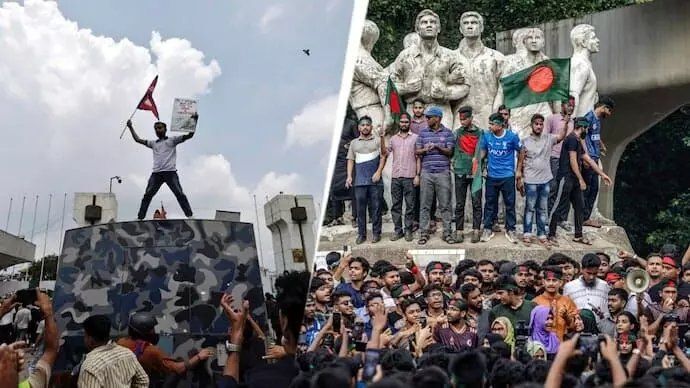
images credit -India Today
Nepal and Bangladesh’s interim governments reflect rising public anger against failed political elites. Generation Z, hit by unemployment, inequality, and corruption, is driving protests that demand accountability. From Sri Lanka to France, the message is global: democracy must deliver real justice and opportunity, not just slogans.
The recent political upheaval in Nepal, where Shushila Karki has been chosen as interim prime minister, is not an isolated event but part of a wider wave of discontent sweeping Asia and beyond. The echoes from Bangladesh—where Nobel laureate Muhammad Yunus was appointed caretaker prime minister under public pressure—are too strong to ignore. Citizens, frustrated by years of political stagnation and broken promises, are forcing change from outside traditional power structures. Similar unrest has gripped France, with street protests over pension reforms, and Sri Lanka, where mass demonstrations brought down a government. The message is clear: public patience is thinning, and the younger generation will no longer tolerate the status quo.
In Nepal, dissatisfaction runs deep. The country has cycled through leaders such as Sher Bahadur Deuba, K. P. Sharma Oli, and Pushpa Kamal Dahal “Prachanda,” yet the lived reality of citizens has hardly improved. Corruption, economic stagnation, and weak governance persist. More than a quarter of the population still lives below the national poverty line, while remittances from migrant workers account for over 23 percent of GDP—evidence of dependence rather than self-reliance. Politicians have shifted chairs while unemployment stays high and infrastructure lags. For a population that once pinned hopes on federal democracy after years of monarchy and conflict, the disappointment is profound.
The protests in Nepal and Bangladesh share a common driving force: Generation Z. Defined by access to information and heightened political awareness, this cohort views democracy not as a ritual of voting every few years but as a constant guarantee of accountability, dignity, and opportunity. When those expectations are betrayed, the backlash is sharp. In Nepal, young protesters denounce corruption and the lack of job creation. In Bangladesh, youth-led mobilizations created the moral momentum for Yunus’s appointment. Across Asia, the same generational energy demands better governance, fairer distribution of resources, and an end to elite impunity.
Discontent is tied to broader structural issues. Income inequality remains pressing: the World Bank lists Bangladesh’s Gini index at roughly 32, Nepal’s at 33, and India’s at 35. Growth has disproportionately favored urban elites and politically connected classes. In Nepal, rural communities and marginalized ethnic groups remain excluded from prosperity. In Bangladesh, rapid economic expansion is lauded internationally, yet garment workers—the economy’s backbone—earn meager wages while wealth accumulates in a few industrial families. Sri Lanka’s 2022 economic collapse was another reminder of how fragile growth becomes when paired with elite mismanagement.
Globally, the frustration is mirrored. French demonstrations over pension reforms and cost-of-living pressures show that even advanced democracies are not immune. Citizens everywhere expect governments to secure not only bread and butter but dignity and stability. In Asia, where more than 60 percent of the population is under 30, the stakes are higher. Ignoring their aspirations risks destabilizing entire political systems.
The larger question is whether politicians are learning from these shocks. So far, the record suggests otherwise. Leaders often dismiss protests as temporary disturbances rather than wake-up calls, offering cosmetic reforms, propaganda, or coercion instead of addressing systemic grievances. Yet the frequency of upheavals shows such strategies are increasingly unsustainable. The public, empowered by technology and social media, can organize, amplify grievances, and force accountability as never before.
Nepal today symbolizes a wider political moment. Citizens insist that leadership is not the preserve of entrenched elites but must rest on moral credibility, competence, and responsiveness. That Shushila Karki, the country’s first female chief justice, now serves as caretaker prime minister is telling: people are seeking trusted figures outside politics. Bangladesh’s choice of Yunus—a man of international reputation but no electoral baggage—underscores the same point. Both cases reveal a crisis of faith in conventional politics and the rise of alternative sources of legitimacy.
The upheavals in Nepal and Bangladesh, along with earlier struggles in Sri Lanka and ongoing protests in France, mark a global trend: the demand for accountable, inclusive, and responsive governance. Income inequality, youth unemployment, and corruption are interconnected challenges that threaten the stability of democracies. If politicians ignore these lessons, unrest will recur, each time more forcefully. What’s needed is not merely a change of faces but a transformation of political culture—one that listens, learns, and delivers. Generation Z’s emergence as a political force signals that the time for superficial fixes is over. Democracy is not a gift from elites; it is the people’s right, and they are ready to defend it.