Hasina Extradition Conundrum: Ultra-Capitalism's Shadow Over Democratic Resilience in South Asia
Bangladesh demands India extradite ex‑PM Sheikh Hasina after death sentence for crimes against humanity; diplomatic, economic, and democratic fallout ensues.

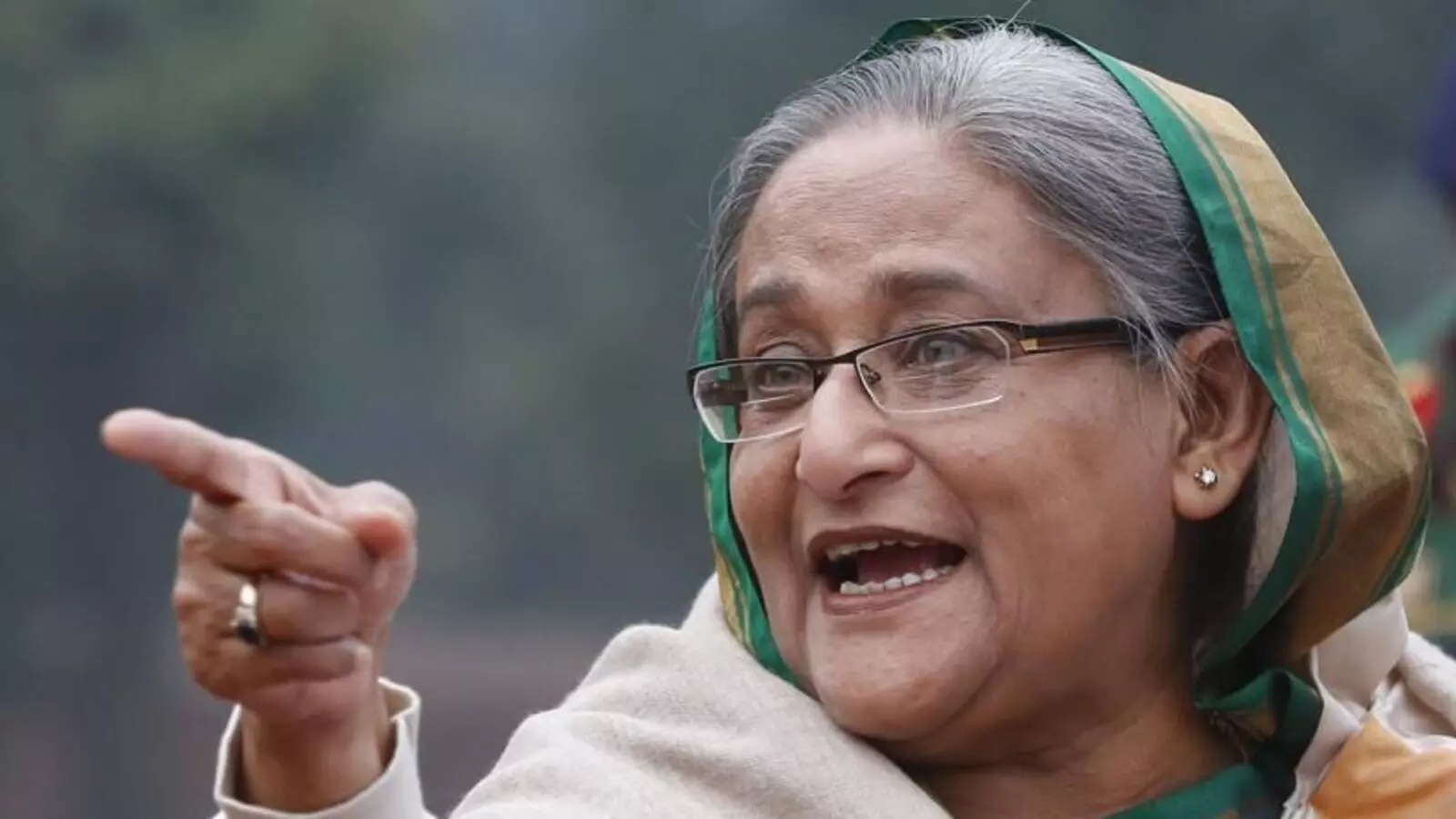
Sheikh Hasina Verdict:
In the labyrinth of South Asian geopolitics, the recent demand from Bangladesh's Foreign Ministry for India to extradite former Prime Minister Sheikh Hasina, following a death sentence by the International Crimes Tribunal for alleged crimes against humanity, epitomizes a profound crisis at the intersection of democracy, justice, and economic imperatives. Pronounced on November 17, 2025, the verdict against Hasina, her former home minister, and police chief stems from the violent suppression of student protests that toppled her government in August 2024. Now ensconced in a Delhi safe house under Indian protection, Hasina denounces the tribunal as a "rigged" instrument of an unelected interim regime, lacking democratic legitimacy. This standoff thrusts India into a Catch-22: comply and betray a longstanding ally, or refuse and risk alienating a neighbor, potentially driving Dhaka deeper into the Sino-Pakistani orbit. Yet, beneath the diplomatic veneer lies a deeper narrative—one where ultra-capitalism orchestrates the rhythm of democracy, eroding its foundational principles of popular sovereignty and rule of law in favor of market-driven realpolitik.
Ultra-capitalism
Democracy, in theory, embodies the Lockean ideal of government by consent, where elected leaders derive authority from the demos, safeguarded by institutions like independent judiciaries and free elections. Hasina's Awami League regime, while flawed with accusations of authoritarianism, was democratically elected multiple times, fostering economic growth through neoliberal reforms that integrated Bangladesh into global supply chains. Her ouster via mass uprisings, however, reflects a Habermasian "public sphere" rebellion against perceived elite capture, where student-led movements channeled grievances over quotas, corruption, and inequality. The interim government's tribunal, hastily convened under Nobel laureate Muhammad Yunus's advisory council, smacks of victor’s justice, reminiscent of Arendt's critique of political trials as tools to legitimize regime change rather than dispense impartial equity. Hasina's statement labeling it "biased and politically motivated" underscores this, portraying the death sentence as an attempt to decapitate democratic opposition and consolidate power under the guise of accountability. [Also Read: Implications of Sheikh Hasina’s Death Sentence & India’s Diplomatic Dilemma]
What Is Ultra-capitalism?
Enter ultra-capitalism, the turbocharged variant of neoliberalism that, as per David Harvey's theorization, prioritizes capital accumulation over democratic deliberation. In the modern age, this manifests as "accumulation by dispossession," where economic elites and foreign powers exploit political instability to reshape markets. Bangladesh's post-Hasina landscape exemplifies this: the interim regime's swift pivot toward economic liberalization, including debt restructuring with IMF backing, signals a commodification of democracy. Ultra-capitalism tempers democratic forces by instrumentalizing them—uprisings become vehicles for regime change that favor investor-friendly policies, sidelining grassroots demands. Hasina's exile in India highlights how democratic leaders, once useful for stability, become expendable when capitalist logics demand "creative destruction." Schumpeter's term here takes a geopolitical twist: the destruction of her government paves the way for new capital inflows, potentially from China, whose Belt and Road Initiative (BRI) loans already ensnare Dhaka in debt traps.
Geopolitically, India's dilemma is steeped in realist theory, where state interests trump ideological affinities. Prime Minister Narendra Modi's government has historically viewed Hasina as a bulwark against Islamist extremism and a partner in countering China's encirclement strategy. Bilateral agreements on water sharing, trade, and security—invoked by Bangladesh's extradition letter—were forged under her tenure, ensuring border stability amid threats from terrorist infiltration and smuggling. Refusing extradition risks invoking reciprocity clauses, allowing Dhaka to abrogate pacts like the Teesta water-sharing deal or transit rights, thereby exposing India's northeastern flanks. This could embolden the China-Pakistan axis, with Beijing's investments in Bangladesh's infrastructure (e.g., Padma Bridge, Cox's Bazar port) amplifying its influence. As Mearsheimer's offensive realism posits, great powers like India must balance against rivals; yielding Hasina might signal weakness, inviting Pakistani-backed militants to exploit porous borders, exacerbating issues like drug trafficking and human smuggling.
Yet, the broader impact on South Asian politics reveals ultra-capitalism's insidious role in hollowing out democratic institutions. In a region scarred by colonial legacies, dependency theory—articulated by André Gunder Frank—explains how peripheral economies like Bangladesh remain tethered to core capitalist powers. Hasina's pro-India stance facilitated FDI from multinationals, boosting garment exports and GDP growth to 6-7% annually, but at the cost of labor exploitation and environmental degradation. The student uprising, fueled by youth unemployment despite economic booms, illustrates Polanyi's "double movement": societal pushback against market excesses. However, the interim regime's tribunal, by targeting democratic figures, risks entrenching a praetorian state where justice serves capitalist realignment rather than democratic renewal. This mirrors patterns across South Asia—Sri Lanka's 2022 debt crisis led to IMF-mandated austerity, toppling the Rajapaksa dynasty; Pakistan's hybrid regime oscillates between military coups and elected governments, all underwritten by Chinese loans; Nepal's federalism struggles amid Indian and Chinese economic tug-of-war.
Extending to Asian politics, this episode underscores a continental shift toward "illiberal democracy," as Fareed Zakaria terms it, where electoral facades mask authoritarian controls, lubricated by ultra-capitalist globalization. In Southeast Asia, Thailand's military interventions and the Philippines' Duterte-era populism reflect similar dynamics: economic elites co-opt democratic processes to maintain hegemony. China's model of state capitalism exports this paradigm via BRI, offering infrastructure in exchange for political leverage, as seen in Myanmar's junta or Cambodia's one-party rule. For India, harboring Hasina aligns with its "Act East" policy, promoting democratic alliances against authoritarian expansionism. Yet, ultra-capitalism complicates this: multinational corporations, prioritizing supply chain resilience post-COVID, may pressure New Delhi to normalize ties with Dhaka's new regime, sacrificing democratic solidarity for economic gains.
Ultimately, the Hasina saga argues for a reinvigoration of democratic forces against ultra-capitalism's tempo. True democracy demands not just elections but Amartya Sen's "capability approach"—empowering citizens beyond market metrics. South Asia's future hinges on resisting capitalist co-optation: India could leverage its soft power, advocating for fair trials and inclusive governance in Bangladesh, while fostering regional forums like SAARC to counterbalance China. Failing this, the region risks descending into a Hobbesian state of perpetual insecurity, where democratic leaders like Hasina become pawns in a geopolitical chessboard dominated by profit over people. As Asia grapples with rising inequalities, this moment calls for a paradigm shift—reclaiming democracy from capitalism's clutches to ensure it serves the many, not the monied few.