India Summons Bangladesh Envoy Over Threats to High Commission, Anti-India Rhetoric
New Delhi voices strong concern over deteriorating security in Bangladesh, rejects “false narratives” by extremist elements, and urges interim government to ensure safety of Indian mission and hold peaceful elections.

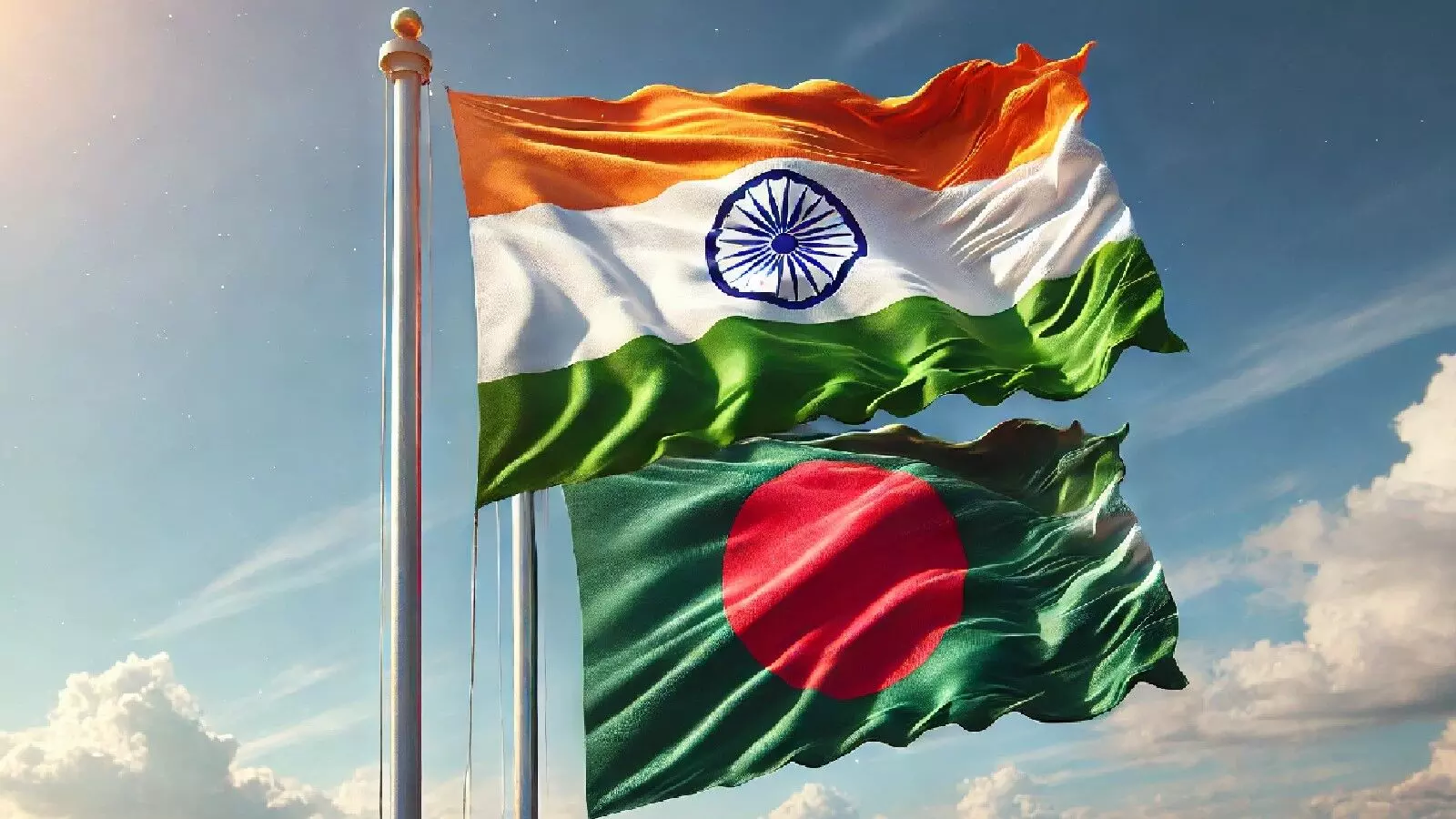
Amid escalating tensions and a rapidly "deteriorating security environment" in Bangladesh, India on Wednesday formally summoned Bangladesh’s High Commissioner to New Delhi to lodge a diplomatic protest over threats to the Indian High Commission in Dhaka and anti-India statements by Bangladeshi political leaders.
The move underscores New Delhi’s "strong concern" over the safety of its diplomatic mission and in particular the "activities of some extremist elements who have announced plans to create a security situation around the Indian Mission in Dhaka."
In an official statement, the MEA underlined that India expects the interim government in Bangladesh to scrupulously uphold its diplomatic obligations, particularly by ensuring the safety and security of all foreign Missions and Posts operating within its territory.
During the meeting, the Bangladeshi High Commissioner was apprised of India’s serious apprehensions regarding these developments.
The MEA said that India completely rejects the "false narrative sought to be created by extremist elements regarding certain recent events in Bangladesh".
India expressed disappointment that the interim government has neither conducted a comprehensive investigation into the incidents nor shared any substantive evidence with New Delhi regarding the incidents.
The diplomatic summons followed India’s categorical rejection of assertions made by the Bangladesh interim government alleging that Indian territory was being used for activities detrimental to Bangladesh’s interests. In a statement, the MEA made it clear that India has never permitted its soil to be used for actions inimical to the friendly people of Bangladesh and reiterated its expectation that the Mohamed Yunus-led interim government would take all necessary measures to maintain internal law and order, including facilitating peaceful elections scheduled for February next year.
These developments come against the backdrop of Bangladesh summoning India’s High Commissioner to Dhaka, Pranay Verma, on Sunday, during which he was informed of the interim government’s concerns over what it termed “continued provocative statements” by former Prime Minister Sheikh Hasina, who has taken refuge in New Delhi following her ouster.
According to the Bangladesh Foreign Ministry, Hasina was allegedly being allowed to make statements that incite her supporters to engage in violent activities aimed at undermining the forthcoming elections. The Indian High Commissioner was further informed that fugitive leaders and activists of the now-banned Awami League were allegedly plotting terrorist activities from Indian territory to destabilize Bangladesh’s political process. Bangladeshi media outlet Prothom Alo reported that Dhaka urged India to arrest and extradite what it described as “fascist terrorists.”
Reiterating the deep-rooted, historic, and people-centric ties between India and Bangladesh, anchored in the shared sacrifices of the 1971 Liberation War and strengthened over decades through development cooperation, cultural exchanges, and close people-to-people contact, India reaffirmed its commitment to peace, stability, and democratic processes in Bangladesh. New Delhi emphasized that it has consistently advocated the holding of free, fair, inclusive, and credible elections in a peaceful and secure environment.
India reiterated its expectation that the interim government would ensure internal law and order and create conditions conducive to peaceful elections.
The Bangladesh Ministry of Foreign Affairs also conveyed that it expects India, as a neighbouring country, to support the people of Bangladesh in upholding justice and safeguarding democratic norms.
In response, the Indian High Commissioner reiterated India’s support for a peaceful electoral process and assured full cooperation in this regard.
Additionally, Dhaka urged that if assailants involved in the recent shooting of Sharif Osman Hadi,convener of the right-wing Inqilab Moncho, were found to have crossed into India, they should be arrested and extradited. Osman Hadi, a supporter of the July uprising, was shot in Dhaka last Friday and remains in critical condition. Bangladeshi media reports have speculated that the attackers may have fled to India following the incident.
Relations between India and Bangladesh have remained strained since the ouster of the Sheikh Hasina-led Awami League government on August 5, 2024, and the subsequent formation of the Yunus-led interim government. Bilateral tensions have been exacerbated by several factors, including persistent attacks on minorities—particularly Hindus—by Islamist groups, sustained anti-India rhetoric from advisors within the interim administration, Dhaka’s growing engagement with Pakistan, and India’s silence on Bangladesh’s request for Hasina’s extradition to face trial for alleged crimes. The interim government has also imposed a ban on the Awami League.
The immediate trigger for the latest diplomatic protest was a provocative statement by a leader of Bangladesh’s National Citizen Party (NCP), who openly threatened that Dhaka would shelter forces hostile to India and assist in severing India’s northeastern states—commonly referred to as the “Seven Sisters”—from the rest of the country. The remarks were made by student-led NCP leader Hasnat Abdullah during a rally organized by Inqilab Mancha, coinciding with Bangladesh’s 55th Victory Day celebrations.
“Seven Sisters will be separated from India,” Abdullah declared, repeating unsubstantiated claims that India was backing individuals accused in the attack on student leader Osman Hadi.
India dismissed these allegations outright, reiterating through the MEA that it expects the interim government of Bangladesh to take all necessary measures to maintain law and order and ensure the conduct of peaceful elections.