Israel Strikes Tehran Command Centres; US Claims 2,000 Targets Hit in Under 100 Hours of Operation Epic Fury

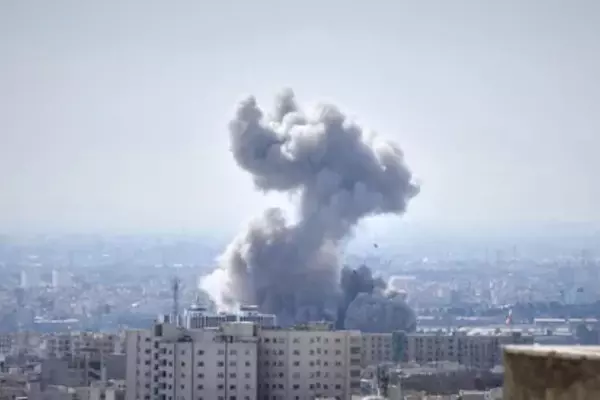
The conflict in West Asia has entered a ferocious new phase, with Israel striking Basij and internal security command centres in the heart of Tehran, the United States reporting the destruction of nearly 2,000 targets in under 100 hours of Operation Epic Fury, and the war now drawing in European allies as Cyprus comes under attack.
The Israel Defence Forces confirmed a series of strikes on command centres belonging to Iran's Basij and internal security apparatus in Tehran — facilities the IDF said were used by the Iranian regime to maintain control across the country. The Israeli Air Force also struck missile launchers and associated systems, and announced that Iranian soldiers operating air defence systems against IAF aircraft had been neutralised. Separately, the Israeli Air Force confirmed it had resumed strikes on Hezbollah's infrastructure in Beirut, widening the operational front.
US Central Command chief Admiral Brad Cooper delivered a sweeping briefing on Operation Epic Fury, painting a picture of an Iranian military being systematically dismantled. In fewer than 100 hours of operations, the US has struck nearly 2,000 targets using more than 2,000 munitions. Admiral Cooper stated that Iran's air defence networks have been severely degraded, with hundreds of ballistic missiles, launchers, and drones destroyed. "The US will not stop," Cooper said, adding that Iran's capacity to retaliate is declining rapidly.
The operation has not been without cost, however. The US Department of War confirmed that four US Army Reserve soldiers supporting Operation Epic Fury were killed at the Port of Shuaiba in Kuwait following an unmanned aircraft system attack — the first confirmed American combat fatalities of the conflict.
The US-based Human Rights Activists News Agency (HRANA) has reported that 1,097 civilians have been killed in Iran since the conflict began on February 28 — a toll that is expected to rise as strikes continue across the country. The figures have drawn international concern over the humanitarian dimensions of a conflict that has so far been framed primarily in military and strategic terms.
The conflict has now reached European shores, with Cyprus coming under attack during the ongoing hostilities. The United Kingdom and France have both responded by deploying warships and air defence assets to the island. UK Prime Minister Keir Starmer reaffirmed Britain's commitment to Cyprus's security in a social media post, while French President Emmanuel Macron ordered the aircraft carrier Charles de Gaulle to reposition in the Mediterranean — a significant signal of Paris's intent to project military presence in the region.
Amid ongoing speculation about Iran's nuclear programme, IAEA Director General Rafael Mariano Grossi stated that there is currently no evidence that Iran is building a nuclear bomb. However, Grossi flagged Iran's large stockpile of near-weapons-grade enriched uranium and its continued refusal to grant inspectors full access as causes for serious and ongoing concern — leaving the nuclear question unresolved even as the conventional conflict rages.