Nepal’s Greek Tragedy: Gurkhas Turned Inward

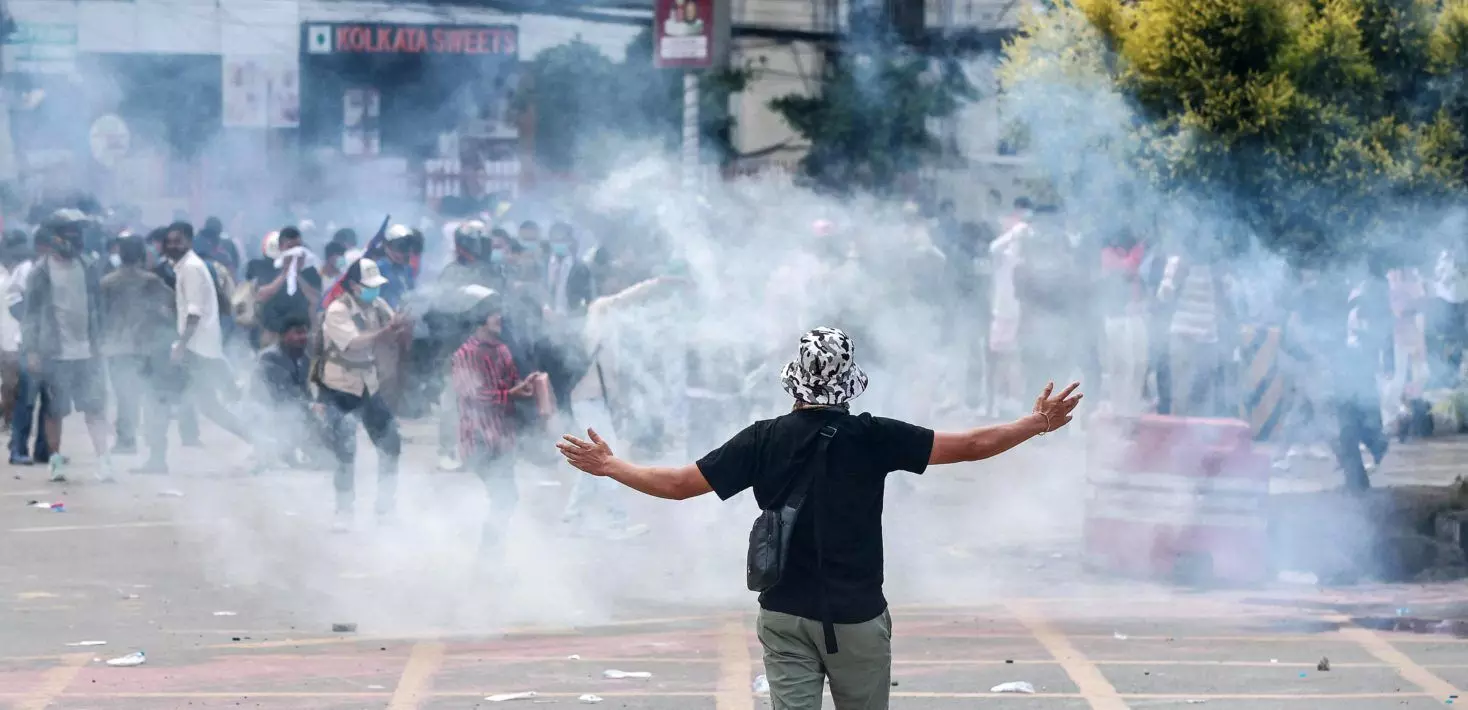
In the theatre of world politics, few nations today resemble a Greek tragedy as starkly as Nepal. A land wedged between India and China, blessed with mountains that touch the sky yet cursed by political turmoil that drags it down, Nepal is reliving the classical arc of hubris, betrayal, and downfall. At the centre of this tragedy stand the Gurkhas—once lionized as warriors of empire, now fighting a battle not for foreign powers but against their own rulers, and tragically, against their own people.
The Gurkha Paradox: Warriors Without a Homeland Cause
For over two centuries, the Gurkhas symbolized loyalty, courage, and martial discipline. They fought under British banners in Flanders and Burma, under Indian flags in Kashmir and Kargil, and under UN peacekeeping helmets in Africa. They became a “militia class,” exported as soldiers-for-hire, a global symbol of bravery.
Yet this very identity is Nepal’s paradox. The Gurkhas were trained to die for others, but rarely empowered to build for themselves. Their sacrifices enriched empires but left Nepal’s soil poor. Today, that same martial heritage is turned inward: the Gurkha youth march on Kathmandu not as defenders of foreign crowns but as rebels against a state that has betrayed them. The tragedy deepens when Nepali soldiers—descendants of the same martial tradition—are deployed against these young protesters. The warrior fights the warrior, the brother faces the brother.
Hubris of the Political Elite
In Greek tragedy, hubris—the arrogance of leaders who defy fate—marks the beginning of downfall. Nepal’s rulers are no different. From K.P. Oli’s nationalist posturing to Prachanda’s revolutionary betrayal, from Deuba’s Congress aristocracy to the Maoists’ compromises, the political class believed it could endlessly manipulate the people, foreign patrons, and institutions.
But like Oedipus who could not escape his prophecy, Nepal’s leaders could not escape the truth: a restless youth, betrayed too many times, would eventually rise. Their hubris blinded them to the generational anger simmering beneath unemployment, corruption, and failed promises. The fall of Oli in September 2025 was not the end of one leader but the unmasking of a class undone by its arrogance.
The Chorus of Youth
In ancient plays, the chorus voiced the conscience of the people, their anxieties and their demands. In today’s Nepal, that chorus is embodied by Gen Z—a digitally connected, politically restless generation. Their chants on Kathmandu’s streets do not merely demand regime change; they ask deeper, tragic questions: Why must we inherit a corrupt system? Why must we fight among ourselves when our ancestors fought together for others? Why is our sacrifice eternal, but our dignity absent?
This chorus is no longer content to stand at the margins of the play. They are the protagonists now, demanding catharsis—an emotional reckoning that could cleanse Nepal’s political stage.
The Cycle of Betrayal
Tragedy feeds on betrayal, and Nepal’s story is thick with it.
From within: Maoist revolutionaries who promised equality became new aristocrats; monarchs who spoke of guardianship presided over exclusion; democratic leaders turned democracy into a family business.
From outside: Neighbours India and China, instead of partners, played the roles of manipulative gods—pulling strings, dangling loans, cutting deals—treating Nepal as a chessboard rather than a sovereign equal.
And so, betrayal begets betrayal, just as in Aeschylus’ “House of Atreus,” where vengeance cycles endlessly until the family consumes itself. In Nepal, the Gurkha legacy has become the instrument of this cannibalism: soldiers and protesters drawn from the same people, facing each other across barricades.
Catharsis or Collapse?
Greek tragedy ends with catharsis—a purging of pain, a moral lesson. Nepal now stands at that stage. The fall of Oli is only Act II of a longer play. The climax will depend on whether Nepal finds leaders who can transform tragedy into rebirth, or whether the cycle of betrayal repeats.
Figures like Balendra Shah, the rapper-turned-mayor, and Sushila Karki, the neutral former chief justice, symbolize a possible catharsis: politics led by accountability, not arrogance. Yet the risk is equally real—that the chorus of youth is silenced, the army remains captive to old loyalties, and the tragedy spirals into collapse rather than renewal.
The Final Irony
The deepest irony is this: the Gurkhas, who once marched proudly under foreign flags, now march against their own flag. A militia once admired for defending others now wages war against its own rulers. It is the essence of Greek tragedy—heroes undone not by enemies abroad, but by betrayals at home.
Nepal’s tragedy is not that it is small, landlocked, or poor. Its tragedy is that a people rich in courage are trapped in a cycle where their strength is used against themselves. The Gurkha blade, once the pride of empire, now cuts into the heart of Nepal’s own democracy.
In the end, Nepal stands like a tragic hero—wounded, proud, betrayed—still searching for the catharsis that could turn its sorrow into strength.