PM Modi Attends SCO Reception in China Amid Warming Ties with Xi Jinping
PM Modi received a warm welcome from President Xi Jinping, with both leaders expressing a commitment to improving ties and expanding investments amid rising trade tensions and U.S. tariffs.

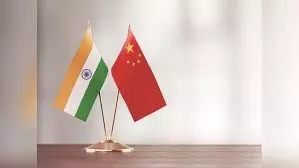
Prime Minister Narendra Modi attended the official reception of the Shanghai Cooperation Organisation (SCO) Summit in Tianjin, China, on Sunday evening, marking a rare moment of warmth between India and China after years of tension.
This is PM Modi’s first visit to China in seven years, and his meeting with Chinese President Xi Jinping — including a one-on-one discussion — stood out as the summit’s key highlight. Both leaders expressed a commitment to improve relations, deepen trade, and boost investment, particularly as both nations face steep U.S. tariffs under former President Donald Trump’s policies.
Xi welcomed Modi warmly at the reception and, in his address to leaders, said the SCO now bears “greater responsibilities” in maintaining regional peace and supporting development, according to Chinese state media.
Modi told Xi that India is committed to strengthening ties based on “mutual trust, respect, and sensitivities.” He also noted a return to peace along the Himalayan border, where deadly clashes in Galwan in 2020 had frozen cooperation. An agreement has been reached on managing the disputed 3,800-km border, though details remain undisclosed.
Xi, too, emphasized that the border issue should not define the entire relationship and called for both countries to move forward as partners, not competitors. Modi also confirmed that direct flights between India and China — suspended since 2020 — will soon resume. Additionally, China has agreed to lift export restrictions on key items like rare earths, fertilisers, and tunnel boring machines.
The Modi-Xi meeting came just days after Washington imposed an additional 25% tariff on Indian goods — a penalty for India’s continued oil trade with Russia — bringing the total U.S. tariffs to 50%. Both leaders appear to be finding common ground in resisting Western pressure. China’s ambassador to India, Xu Feihong, recently said Beijing "firmly stands with India" against these trade penalties.
The SCO Summit also saw Modi engage with several world leaders, including Russia’s Vladimir Putin and leaders from across Asia and the Middle East. On social media, Modi posted photos with Maldives President Mohamed Muizzu, who once campaigned on an anti-India platform but has since acknowledged India’s developmental support. Modi also shared photos with Nepal’s KP Sharma Oli and Myanmar’s Senior General Min Aung Hlaing, expressing hope for free and fair elections in Myanmar.
Notably, there was no interaction reported between Modi and Pakistan’s Prime Minister Shehbaz Sharif. In the group photo, the two leaders stood far apart, reflecting India’s continued position of “no talks until terrorism ends.”
The SCO, founded in 2001 by China, Russia, and Central Asian nations, has grown to include India and Pakistan (since 2017), Iran (2023), and Belarus (2024). The forum, once seen as a counterbalance to U.S. influence, now serves as a platform for Global South solidarity.
As tensions ease, experts say India and China are cautiously working to redefine their relationship.
“Both countries are engaged in what is likely to be a lengthy and complex process of finding a new equilibrium,” said Manoj Kewalramani, a China-India expert at the Takshashila Institution.
While challenges remain, the tone at the summit suggests that both sides are willing to talk — and perhaps, slowly, to rebuild.