Poland and NATO: Navigating the Tensions of Drone Incursions and Russian Aggression

Images Credit -BBC NEWS
In recent weeks, Poland has found itself at the epicenter of international tensions following a series of drone incursions that have raised eyebrows and concerns within NATO. The question many are asking is: how does Poland, a staunch member of NATO, respond to these provocations from Russia, especially as the Ukraine war continues to unfold?
### The Incident: Russian Drones Over Poland
On a seemingly ordinary night, Polish airspace was violated when 19 Russian drones entered, prompting a swift military response. Polish and NATO aircraft intercepted and shot down several of these drones, marking a significant event as it was the first time that any Russian drones had been downed over a NATO member state. However, this act of defense has led to a deeper discussion regarding Poland's security and the implications of such provocations.
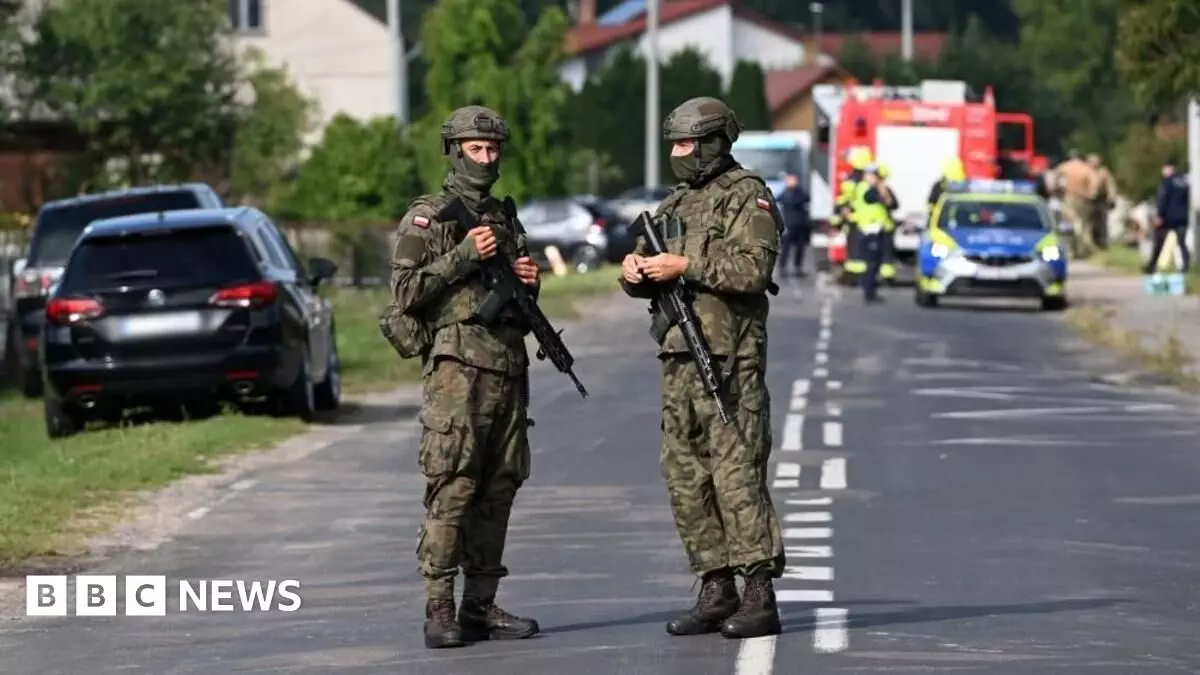
Tomasz Wesolowski, a resident of Wyryki-Wola, experienced this firsthand when a drone crashed into his house, damaging his property but, fortunately, leaving him and his family unharmed. "I turned on the TV, and all the news was about this massive drone flight... and suddenly something boomed," he recounted. This incident serves as a harrowing reminder of the conflict’s proximity and potential for escalation.
### NATO’s Role and Global Reactions
As NATO allies rallied in support of Poland, the implications of this incident were felt far beyond its borders. NATO Secretary General Jens Stoltenberg emphasized the alliance's commitment to Poland, stating that any attack on one member is considered an attack on all. This collective defense principle is what binds NATO countries together and underscores the seriousness of the situation. Countries like the UK, France, and Germany have voiced their condemnation of Russia's actions, reaffirming their support for Poland and Ukraine.
Ukrainian President Volodymyr Zelensky has also weighed in, urging global leaders to take stronger actions against Russia. "Unfortunately, as of now, Russia has not received a tough reaction from global leaders to what the Russians are doing," he noted, calling for more than just statements of support.
### What’s Next for Poland?
With tensions mounting, Poland's Prime Minister Donald Tusk has warned that the country is at its closest to open conflict since World War II. This statement is not made lightly; it reflects a growing fear among the Polish populace regarding the unpredictability of Russian aggression. Analysts believe that these drone incursions could be a precursor to more direct actions, particularly with upcoming military exercises planned in Belarus, which have been described as aggressive in nature.
As Poland fortifies its defenses, discussions among NATO allies regarding collective military preparedness are intensifying. The potential for further provocations looms large, and Poland's response will likely shape the future of NATO's eastern flank.
### Conclusion: Standing Strong Amidst Uncertainty
In conclusion, Poland finds itself navigating a precarious situation. The recent drone incidents are more than mere provocations; they are a test not only of Poland's military readiness but also of NATO's unity. As the international community watches closely, the importance of a strong, coordinated response cannot be overstated. The decisions made in the coming weeks will undoubtedly influence the trajectory of the ongoing conflict and the stability of Central Europe.