Rights Groups Condemn Mob Attacks on Bangladesh Media Houses and Cultural Institution
International organisations warn assaults on Prothom Alo, The Daily Star and Chhayanaut, along with deadly mob violence, threaten free expression and democratic space ahead of 2026 elections

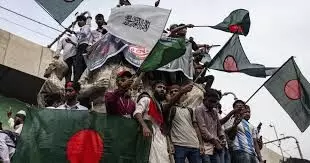
A coalition of international human rights organisations has heavily condemned the coordinated mob attacks on the offices of prominent media houses Prothom Alo and The Daily Star, and decried the vandalism of one of the country's most important socio-cultural institutions, Chhayanaut, calling the incidents a serious threat to the freedom of expression and democratic participation in Bangladesh.
In a joint statement issued on Monday, the groups said the attacks on December 18 on the two media houses and the country's leading cultural institution posed a serious threat to independent journalism, cultural life and its civic space.
The organisations also expressed alarm over the killing of a Hindu national and factory worker Dipu Chandra Das, who was brutally beaten to death and then publicly burnt alive by laughing mobs in Bhaluka, Mymensingh, on the same night, due to now-proven false allegations of making "derogatory remarks" about religion.
Expressing concern over the barbaric incident, the groups noted that the killing underscored the creation of a climate in which mob violence, religious extremism, and intolerance were increasingly being rewarded with impunity, and silent govt backing via by their alleged indifference.
Preceded by the assassination of prominent July Uprising figure, and spokesperson for the newly-formed cultural organisation Inqilab Moncho, Sharif Osman Hadi, after he was shot in the head in Dhaka by unknown assailants on December 12 and died six days later.
According to the statement, the targeting of politicians, activists, media outlets and cultural institutions in quick succession raised serious concerns about the erosion of the rule of law, particularly as the country moves towards national elections scheduled for Feb 12, 2026.
Bangladesh is noted to have historically experienced long periods of political instability marked by protests, crackdowns and contested elections, ever since its independence on Dec 16, 1971.
During this time, media outlets and cultural spaces have been consistently censured or attacked due to their pivotal role in shaping public discourse, therefore making them frequent flashpoints during moments of heightened tensions.
The groups criticised what they described as the state's failure to respond effectively to online hate speech and incitement to violence, they noted that a good deal of the attacks appeared to have been fuelled by calls to violence circulated by prominent social media users, highlighting both law enforcement failures by the police authorities, and exposing the shortcomings of technology companies maintaining safeguards for preventing public harm.
Referring to Bangladesh's constitutional obligations and its commitments under international human rights law — including the International Covenant on Civil and Political Rights — the organisations said the state had a duty to prevent such attacks, protect those at risk, investigate crimes promptly and hold those responsible to account.
Issuing a statement, the groups urged the interim government to provide immediate protection for journalists, media houses and cultural institutions, conduct swift, independent and transparent investigations into the attacks, and to publicly condemn violence against media and cultural spaces.
Additionally, they also called for concrete measures for ensuring public safety, by curbing all online calls to violence, and provide a safe environment for free expression and civic participation in the run-up to the next elections.
The statement was signed by Access Now, Bangladesh Legal Aid and Services Trust, Human Rights Watch, International Truth and Justice Project, Journalists for Democracy in Sri Lanka and Tech Global Institute.