Soft on Rivals, Hard on Partners: Trump’s India Problem

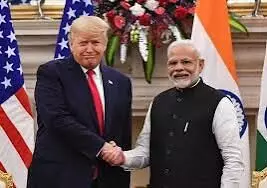
When Washington berates New Delhi for buying discounted Russian crude, it casts India as a violator of global norms. Yet, even as ExxonMobil executives quietly explore their own oil deals with Moscow, the Trump administration saves its harshest rebuke not for rivals, but for a partner. Tariffs on Indian exports are the latest reminder that America’s contradictions run deep: China is too risky to antagonize recklessly, Russia too volatile to provoke outright, but India, assertive yet tethered by partnership, is the convenient test case. Standing tall, it seems, costs New Delhi more than standing opposed ever costs America’s real adversaries.
Why India, Not China or Russia?
China openly defies Washington through trade manipulation, military posturing, and technological rivalry. Yet confrontation remains carefully managed, sanctions are offset by negotiations, and the relationship is never pushed to the breaking point. Russia, too, is castigated in public but handled selectively; the Exxon backchannel is proof that moral outrage gives way when American corporate interests are at stake. Against this backdrop, India becomes the “safe target”: large enough to demonstrate US toughness, but still too invested in the partnership to risk walking away.
The Cost of Standing Tall
India’s real transgression is not Russian oil or trade deficits. It is the assertion of sovereignty, refusing to dilute its digital tax policies, protecting its pharmaceutical industry, safeguarding domestic agriculture, and securing energy independence on its own terms. For this, New Delhi is punished through tariffs that masquerade as economic policy but, in reality, are a means of disciplining a partner. The US message is clear: allies who refuse to play subordinate roles will be tested.
Strategic Short-Sightedness
This strategy, however, risks undermining America’s own long-term interests. Washington claims to need India as a counterbalance in the Indo-Pacific. Yet by treating it as a subordinate to be corrected rather than a partner to be respected, it erodes the very trust it needs. The hypocrisy of condemning India’s oil trade while exploring its own deals with Moscow only sharpens the sense that the rules are applied unequally. Strict for friends but negotiable for adversaries.
The Takeaway
There is no doubt that India today is paying the price for standing tall. Far from being rewarded for its democratic alignment and growing global weight, it is cast as the example through which Trump can project his “America First” tough image. Adversaries are managed with caution. Allies are tested with punishment. The contradiction is not just unfair to India. It is strategically myopic for the United States, especially in the long run.
(The writer is a versatile content professional with 20+ years of experience, specializing in customized, high-impact writing across education, PR, corporate, and government sectors.)