Straitened Horizons: India's Geopolitical Gambit Amidst Sanctioned Seas, Deficits, and Iran's Benign Munificence
India’s cautious return to Iranian oil signals a high-stakes geopolitical balancing act, as soaring crude prices, Hormuz tensions, and a widening trade deficit expose the fragile underbelly of its energy security.

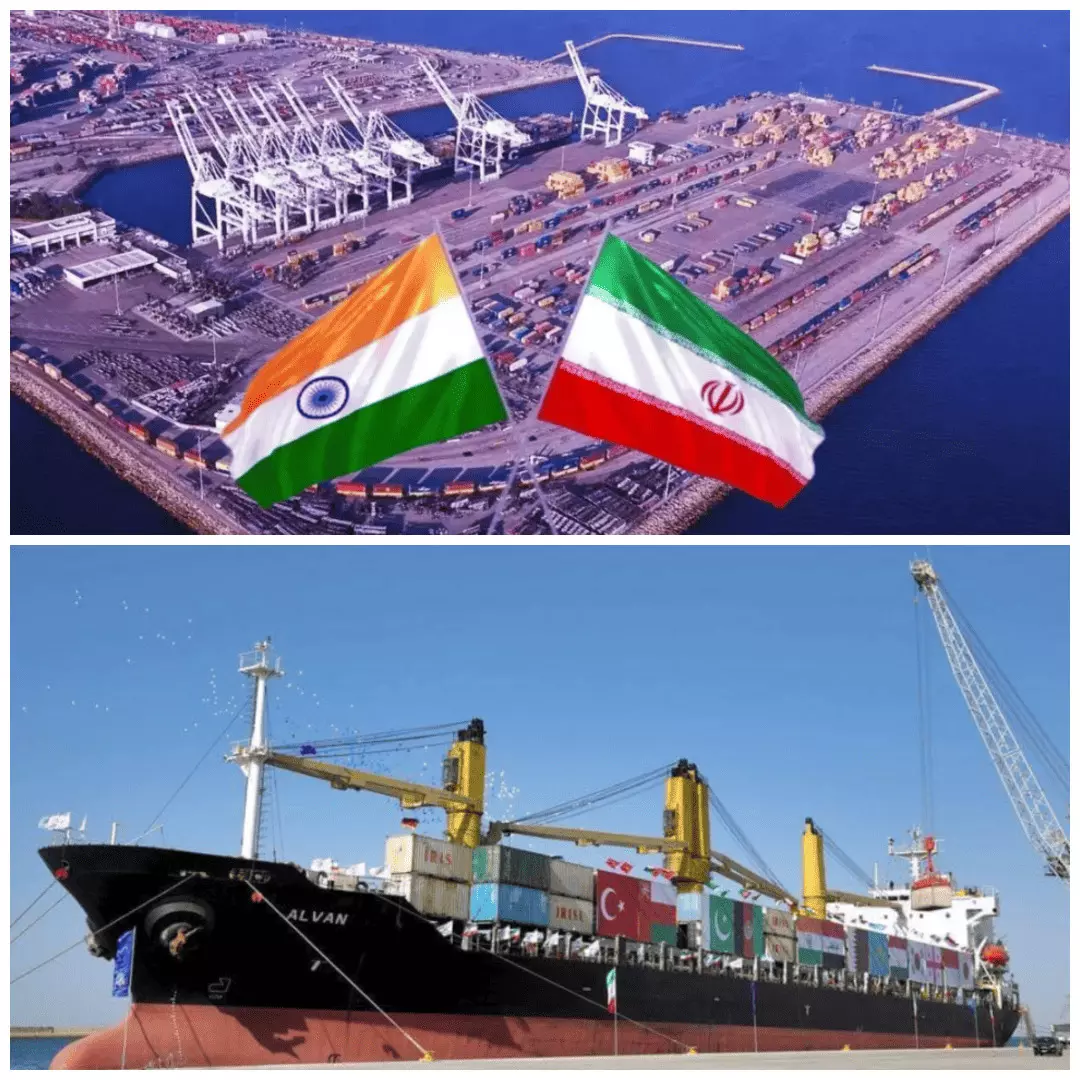
In the roiling cauldron of global energy realpolitik, where supertankers navigate the Strait of Hormuz like leviathans through a fusillade of sanctions and sabre-rattling, India's resurrection of Indo-Iranian crude commerce emerges as a poignant parable of diplomatic dexterity and deficit-driven desperation. The Ping Shun's impending docking at Vadinar—600,000 barrels from Kharg Island, the first since May 2019's U.S.-orchestrated embargo—heralds not unalloyed triumph but a precarious palliative amid Brent's stratospheric $118.35 perch and a 63% March surge, the most vertiginous in epochs. This flicker, as experts opine, revives a vital artery severed by Washington's "maximum pressure" under Trump 1.0, now tentatively thawed by his 2025 redux, lest gasoline gouging imperil Republican midterms. Yet, beneath this veneer lies India's Sisyphean saga: a trade deficit engorged under U.S. administrative duress, where every nation's nativism—be it Washington's electoral exigencies or Tehran's territorial tenacity—prioritizes parochial gains over global concord. Indian foreign policy, bereft of a luminous beacon for tomorrow, adroitly exploits fissures; yet, Iran's magnanimous heart, permitting Indian vessels for the proletariat's sake, stands as a paragon of pragmatic philanthropy in perdition's shadow.
Geopolitics here is no abstract chessboard but a visceral vortex, compounded by military miasma. U.S. Defence Secretary Pete Hegseth's avowal of "unpredictability"—with wars portended at "four to six to eight weeks, or any number"—amplifies Hormuz's hazards, where disruptions could eclipse 20% of global throughput. Trump's waiver, narrowly greenlighting pre-March 20 cargoes till April 19, is less altruism than arbitrage: assuaging domestic pump pain while feigning fealty to Obama's JCPOA ghosts, abrogated in 2018 over Tehran's nuclear nebulousness. India, the third-largest oil importer at 5.6 million barrels per day (bpd), imports 85%—1.7–1.8 billion barrels annually via 75 VLCCs monthly. Sanctions' hiatus wrought havoc: Iran's erstwhile 10% share (500,000 bpd, $12 billion value) evaporated, inflating costs by 20–30% through pricier pivots to Iraq (23% now), Saudi/UAE surges, and post-2023 Russia's discounted deluge (2 million bpd April deals, down from peaks amid ASEAN avarice from the Philippines to Indonesia).
Quantify the perdition: India's current account deficit (CAD), ballooning to 2.5% of GDP ($70 billion FY26 est.), devours forex reserves; oil alone gulps $220 billion yearly, up 50% since 2019 sans Iran. Diversification's dividend? Pyrrhic. Russian Urals at $60–70 (pre-discount) supplanted Iran at $50s, but logistics levies—shadow fleets, insureless voyages—erode economies. Pre-sanctions, Chabahar port beckoned as an INSTC conduit, slashing Afghanistan–Central Asia transit by 60%; now, dwarfed by Pakistan's Gwadar (CPEC-fuelled), India's $500 million investment languishes, Chabahar's throughput idling at 2.5 million tons versus the envisioned 82 million. Data damns the dalliance: FY19 Iran imports yielded $4/barrel savings over Brent; absent, refineries like Jamnagar haemorrhaged $2–3 billion in margins, per Reliance filings. Present plight? Inventories taut amid Russia competition—April volumes slip 10%—compelling this Iranian interlude, abetted by Sea Bird's LPG at Mangalore and BW Tyr/Elm's LPG transits. Pakistan's pittance (2 VLCCs/month) underscores asymmetry; Iran greenlights 20 Pakistani ships weekly, yet prioritizes India's public pulse, waiving war's wrath for essential elixirs.
Every hegemon harbours a Hobbesian heart: U.S. sanctions as electoral exegesis, China flouts with impunity (Iran's shadow buyer extraordinaire), Russia peddles to pariahs. India's Multi-Alignment—Jaishankar's "visiting many rooms"—extracts succour sans subservience: Russian 35% basket share defies G7 opprobrium, UAE rupee deals de-dollarize, now Iran's benevolence. Tehran, under Pezeshkian's olive branch—"necessary will" for war's surcease sans aggression recidivism—betrays no bitterness, facilitating Indian flows when U.S. vicissitudes vouchsafe. What largesse! Amid Israel's Iron Dome duels and Houthis' Hormuz harassment, Iran eschews Schadenfreude, honouring fraternal famine—fertilizers, pharma flows untrammelled—for 1.4 billion souls' sustenance. Contrast Delhi's diplomatic diffuseness: no enshrined Iran pact, no Chabahar codicil post-waiver. Foreign policy proffers no perpetual panacea; it's peripatetic pragmatism, beaconless in Beltway caprice. Trump 2.0's waiver? Ephemeral, like Biden's lapsed surcharges; post-April 19, recidivism looms if polls pivot.
This deficit dialectic exacts exsanguination: cumulative losses since 2019? $150–200 billion in elevated imports, per CRISIL; rupee depreciation (83/USD) amplifies to ₹16 lakh crore. Refiners' razor margins—negative $5–10/barrel sans cheap Iran—stoke inflation at 6.5%, eroding Atmanirbhartha's allure. Present crucible: April's 2 million bpd Russian quest falters against ASEAN interlopers; Hormuz volatility (Bloomberg hedges spike 40%) portends $130 Brent. Iran's intercession—LPG lifeline, Ping Shun's bounty—buys bandwidth, yet underscores dependency's denouement. India lost strategic sinew: pre-2019, Iran fortified IMEC (India-ME-Europe Corridor) bulwarks; now, G20's green hydrogen dreams founder on fossil fealty.
Affirm, then, this narrative's veracity: nations navel-gaze—America's polity over principle, Iran's irredentism interleaved with Indian amity. Delhi's diplomacy, adroit yet adrift, assures nought eternal; Iran's "big heart" illuminates the void, privileging public over payback. To transfigure tribulation: accelerate SPR fills (9 million tons now), nuclear triad (INS Arighaat patrols), green corridors (SAARC grids). Chabahar revival, rupee–rial reciprocity—post-waiver weapons. In sanctions' straitjacket, India's odyssey endures: bearing deficits with defiant diversification, supping with straits' sovereigns, eyes cast upon lost ledgers and looming largesse. The Ping Shun's prow heralds not hegemony's harvest but a hummingbird's hope—fragile, yet fiercely vital in geopolitics' gale.