The Pearl Harbour Paradox: When Surprise Warfare Eclipses Strategic Trust
Trump’s Pearl Harbour remark to Japan PM Sanae Takaichi triggers diplomatic unease, raising concerns over US secrecy, ally trust, and Indo-Pacific stability.

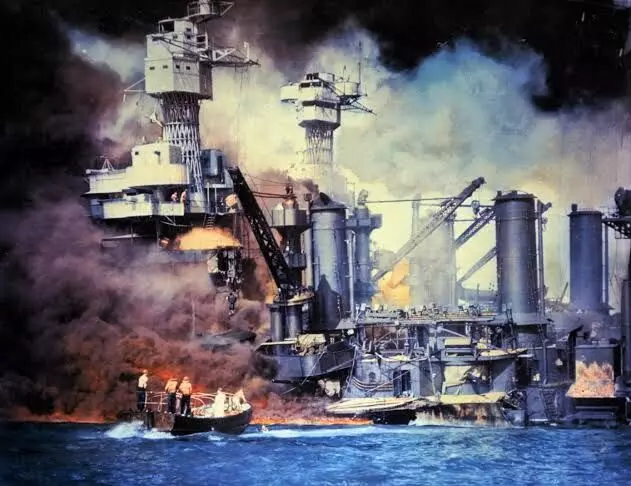
In the high-stakes theatre of global diplomacy, words are rarely just words; they are the scaffolding upon which national security and economic stability rest. Yet, on March 20, 2026, during what was intended to be a revitalizing summit for the U.S.-Japan alliance, President Donald Trump dismantled decades of diplomatic protocol with a single, jarring question directed at Japanese Prime Minister Sanae Takaichi: “Why didn’t you tell me about Pearl Harbour, OK?”
This was not merely a lapse in judgment or a case of a "loud-mouthed" leader being insensitive. It was a defining moment that signalled a profound shift in the 21st-century world order—a shift where the "element of surprise" is valued more than the sanctity of a treaty, and where historical trauma is weaponized to justify modern isolationism. The message to the reader is clear: we have entered an era where being a "best buddy" to Washington no longer guarantees a seat at the table, but merely a front-row seat to the fallout.
The setting for this exchange was thick with irony. Prime Minister Takaichi, a noted hawk who has championed Japan’s "proactive contribution to peace" and sought to normalize its military standing, sat in the White House to solidify a partnership against rising threats in the Indo-Pacific. She spoke of a "shared goal" and triumphantly declared that "Japan is back." But Trump’s invocation of the 1941 surprise attack effectively dragged her back to a past that modern Japan has spent eighty years transcending.
By equating his recent unprovoked strikes on Iran with the infamy of Pearl Harbour, Trump did more than offend a guest; he implicitly redefined American foreign policy as a mirror image of the very aggression the U.S. once fought to extinguish. As former Indian Foreign Secretary Kanwal Sibal noted, this logic effectively admits to unprovoked aggression. By his own comparison, Trump framed American military action not as a measured response of a superpower upholding international law, but as a "surprise" strike modelled after the very event that brought America into World War II.
The core of the argument lies in Trump’s defence of secrecy. His logic—that notifying European and Asian allies would have "signalled too much" and ruined the surprise—reveals a deep-seated distrust of the very nations that host American bases and fuel the American economy. To suggest that Japan, a nation that relies on the U.S. security umbrella for its survival, cannot be trusted with advance notice of a conflict that directly threatens its energy supply is a staggering indictment.
This "Post-Consultative Era" creates a dangerous vacuum. When the U.S. acts in total secrecy, it leaves its partners to deal with the chaotic aftermath—be it surging oil prices, redirected shipping lanes, or the threat of retaliatory strikes on Japanese soil—without a moment’s preparation. Trump’s boast that the lack of notification allowed the U.S. to "knock out 50 per cent" of his targets is a purely kinetic metric of success. It completely ignores the diplomatic collateral damage. If the U.S. treats its allies with the same level of secrecy it applies to its enemies, the very definition of an "ally" has changed from a partner to a spectator.
The "message" of this story is perhaps most urgent when looking at the economic reality. Japan relies on the Middle East for more than 90% of its crude oil imports. When the U.S. launches a "surprise" war in the Persian Gulf, it isn't just a military manoeuvre; it is a direct assault on the Japanese economy. While Trump was calling Takaichi a "spectacular woman" at dinner, his administration had already forced Tokyo into a crisis-management mode that included halting shipping through the Strait of Hormuz.
The hypocrisy is compounded by Japan’s current efforts to modernize. Takaichi is currently navigating a massive $40 billion nuclear energy transition involving American firms to reduce this very dependency on volatile regions. By destabilizing the Middle East without warning, Trump has effectively sabotaged his own allies’ economic roadmap while simultaneously demanding they pay more for "protection." The Pearl Harbour comment was the salt in an open economic wound, reminding Tokyo that its prosperity is a secondary concern to a headline-grabbing military "win."
We must also address the specific position of Sanae Takaichi. As a leader who has often been compared to Margaret Thatcher for her firm stance on national defence, she is perhaps the most "pro-American" leader Japan has seen in decades. For her to be the target of such "brutally insensitive" rhetoric shows that even ideological alignment offers no protection from the President’s transactional whims.
Her reaction—the widening of eyes, the sudden retreat of a smile, the physical recoil—was the physical manifestation of a nation realizing it is being patronized rather than partnered with. It was the moment the "best buddies" facade cracked to reveal a hierarchy where the U.S. is the unpredictable hegemon, and Japan is the silent subordinate, expected to provide the bases but never the input.
The broader geopolitical implication is that this "Surprise Doctrine" will inevitably drive allies to seek autonomy elsewhere. If the U.S. views its partners as security risks, those partners will eventually view the U.S. as an unreliable protector. We are seeing the early tremors of a world where Japan, South Korea, and European powers may begin to decouple their security interests from Washington, realizing that a "surprise" for the enemy is often a "surprise" for the friend.
Trump’s logic assumes that the U.S. can act in a vacuum, but in a globalized 2026, there is no such thing as a localized surprise. Every bomb dropped in the Middle East reverberates through the stock exchanges of Tokyo and the diplomatic halls of New Delhi.
In the end, the Pearl Harbour remark was not a joke that fell flat; it was a revelation. The message we want to leave the reader with is one of profound caution: when the leader of the world’s most powerful military begins to model his strategy after the most infamous surprise attack in history, the line between "protector" and "aggressor" begins to blur.
For Prime Minister Takaichi, the lesson of the White House meeting was painful. Japan may be "back," but it is back in a world where its closest ally views history not as a lesson to be learned, but as a punchline. The challenge for the rest of the decade will be whether the world can maintain stability when the anchor of the West chooses to weigh itself in the dark.