Trump’s War Gamble: Approval Ratings in Freefall and the Weight of History
Donald Trump’s Iran war gamble triggers a sharp fall in approval ratings, rising oil prices, and growing political backlash. Economic strain and weak public support raise concerns ahead of key US elections.

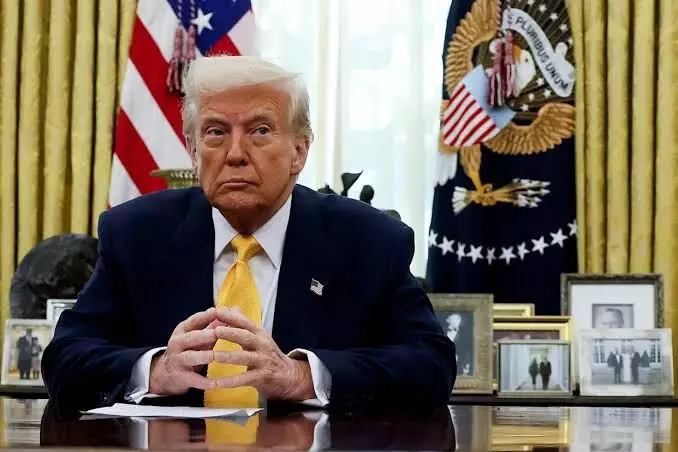
Donald Trump’s presidency is increasingly defined not by triumph but by turbulence. His decision to launch a war against Iran has coincided with a dramatic collapse in public approval, raising the question of whether he is walking into the same political quicksand that swallowed past leaders who misjudged the public mood. The numbers are stark: Trump’s approval rating hovers at 38 percent, with nearly 60 percent disapproving. No U.S. president in recent memory has entered a major military conflict with such weak support. Barack Obama’s controversial Libyan intervention in 2011 began with 60 percent of Americans backing it. Trump, by contrast, has started from a position of political deficit.
Wars rarely gain popularity as they drag on. Lyndon Johnson’s escalation in Vietnam eroded his credibility to the point he declined to seek re-election. George W. Bush’s Iraq war, initially buoyed by patriotic fervor, became a quagmire that defined his legacy. Trump’s gamble looks even riskier: he has entered conflict with less support than either Johnson or Bush, and with a fractured domestic base. The MAGA movement was never opposed to foreign wars per se, but it despised losing them. Trump’s promise of a swift victory in Iran is already unraveling into a prolonged nightmare.
Polls reveal shifting ground beneath his feet. A Gallup survey released just before the war began showed that—for the first time this century—more Americans sympathize with Palestinians than Israelis. The biggest drop in support for Israel has come among Independents, whose views have shifted significantly during the Gaza conflict. Tucker Carlson, the loudest conservative critic of the Iran war, branded it “Israel’s war.” Joe Rogan, influential among disillusioned young men who form part of Trump’s 2024 support base, said they felt “betrayed.” These voices matter because they represent constituencies Trump cannot afford to alienate. The erosion of trust among his own followers is unprecedented.
The administration’s messaging has been chaotic. Defense Secretary Pete Hegseth’s approval rating languishes at 37 percent, worsened by his dismissive comments about civilian casualties in Iran. Trump himself has contradicted his own rhetoric repeatedly: one day calling rising oil prices “a small price to pay for peace,” the next day scrambling to reassure markets that the war was nearly over. Such inconsistency recalls his early pandemic messaging—glib reassurances that quickly unraveled under the weight of reality.
Economic fallout compounds the crisis. The International Energy Agency has described the disruption to global oil markets as the largest in history. Rising fuel and food prices are eroding household confidence, echoing the vulnerability that plagued Jimmy Carter during the 1979 oil shock. Americans rarely reward presidents who preside over spiraling living costs, regardless of GDP or stock market figures. Trump’s dismissals of the price of oil sound eerily similar to his airy reassurances at the beginning of the pandemic, when he insisted the virus was under control. The public is not convinced.
Iran, meanwhile, has exploited U.S. vulnerabilities with scattered but effective attacks on Gulf infrastructure, shutting down energy production and shipping lanes. What began as derided pinpricks has become a strategic campaign inflicting real pain. The Iranian regime, whose main goal is survival, is targeting precisely the political and economic vulnerabilities of the U.S. and its Middle Eastern allies. Trump’s promise of swift victory is fading into a protracted stalemate, and the MAGA base may not tolerate prolonged attrition.
The broader historical pattern is clear: presidents who misjudge public sentiment on war often face political ruin. Johnson’s Vietnam escalation destroyed his credibility. Carter’s handling of the oil crisis and the Iran hostage debacle doomed his re-election. Bush’s Iraq war became synonymous with mismanagement and decline. Trump, however, has entered conflict with less support than any of them, and with a domestic base already showing cracks.
As midterm elections loom, Republicans in Congress remain largely silent but privately anxious. Rising costs, declining approval, and the perception that Trump is being led by Israeli Prime Minister Benjamin Netanyahu raise the haunting question: whose war is America fighting? Media reports suggest Trump is being “led up a garden path” by Netanyahu, fueling suspicions that the U.S. is fighting Israel’s war rather than its own. This perception is politically toxic, especially as Americans grow weary of foreign entanglements that deliver little benefit at home.
It doesn’t matter how much presidents tout positive GDP, stock market gains, or employment numbers; if Americans are struggling with the cost of living, their view of both the economy and the president will be bleak. Trump’s rhetoric about the price of war has neither been convincing nor acceptable to his own followers. His constant contradictions—roaring one night that only “fools” would oppose the war, then backtracking the next day to calm markets—have eroded confidence. Few Republicans in Congress have been prepared to stand up to him, but as elections approach, many will be silently praying he finds an excuse to end the war quickly.
Trump’s gamble in Iran is beginning to look less like a show of strength and more like a march toward political isolation. Approval ratings in freefall, economic pain at home, and a war with no clear endgame—these are the ingredients of presidential decline. History suggests that leaders who ignore public sentiment in times of war rarely escape unscathed. Trump may believe he can defy gravity, but the weight of history and the numbers suggest otherwise.