Victory Without Defeat: The Illusion Driving West Asia’s Endless War
West Asia war turns into a battle of narratives as US, Iran and Israel avoid defeat, exposing limits of power, diplomacy and global institutions.

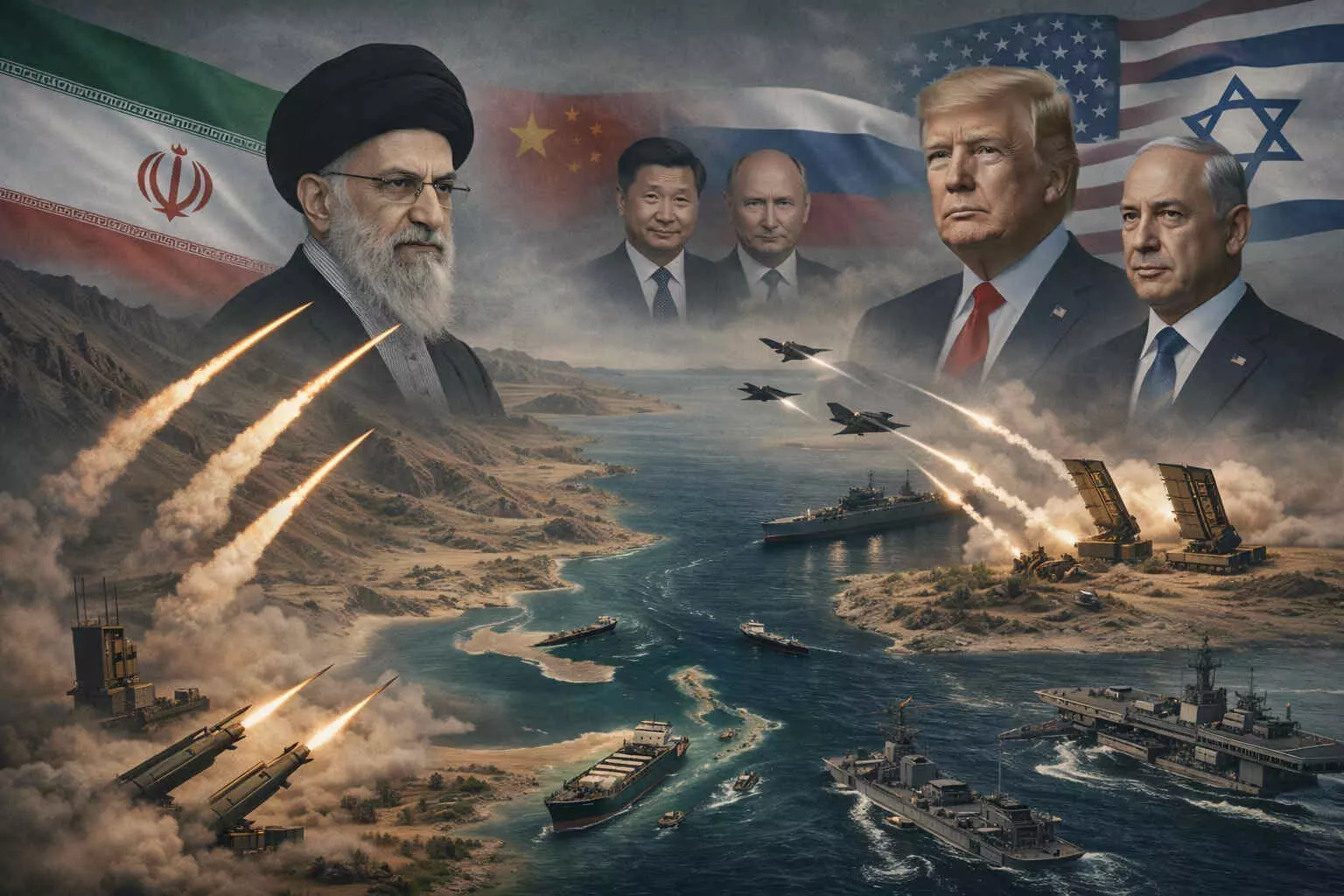
The war in West Asia is no longer about territory, nor even about military supremacy—it has become a theatre of illusions, where leaders cling to narratives that matter more than facts on the ground. What began as a “short and swift” campaign against Iran has dragged into weeks of attrition, exposing the limits of American power and the dangers of pride-driven geopolitics. The US, entrapped by Israeli insistence on Iran’s surrender, finds itself unable to retreat without humiliation, while Iran refuses to yield, prolonging the conflict to deny Washington the satisfaction of declaring victory.
Rare losses—two US warplanes downed, helicopters hit, hundreds wounded—have punctured the myth of invincibility. Yet instead of recalibrating, Washington proposes a staggering $1.5 trillion defence budget, a gesture less of strength than of desperation. Even within Trump’s own party, doubts simmer, revealing fractures in domestic consensus. Iran, meanwhile, signals openness to negotiations, but only on terms that preserve dignity and acknowledge the illegality of the war. By thanking Pakistan for mediation and insisting its position has been misrepresented, Tehran crafts a narrative of resilience, positioning itself as a sovereign actor rather than a defeated adversary.
The manipulation of perception is the true battleground. Netanyahu demands continuation until surrender, Trump seeks an “honourable exit,” and US media frames Iran as cornered. Yet Iran’s ability to strike back—downing aircraft, threatening shipping routes, and even reporting projectiles near nuclear facilities—undermines every claim of American dominance. The United Nations, paralysed by divisions, offers little more than statements, exposing the impotence of global institutions when great powers refuse compromise.
Behind the story lies a geopolitical trap. The US entered under the illusion of quick victory, but Iran’s asymmetric strategy ensures that Washington bleeds politically and economically. For Trump, escalation is the only way to maintain the illusion of triumph, yet escalation risks deeper entanglement. Negotiation, on the other hand, would mean admitting Iran was never vanquished. Either path is humiliation—one abroad, the other at home. Netanyahu’s insistence on prolongation reflects Israel’s strategic calculus, but for Washington it is a liability, a partner pushing an agenda that conflicts with domestic realities. Pakistan’s mediation highlights how regional actors exploit openings to assert relevance, while the UN’s paralysis underscores the erosion of multilateral authority.
This war is sustained not by battlefield logic but by the refusal to accept limits. It is about pride, about leaders trapped by their own rhetoric, unable to retreat yet incapable of decisive victory. It is about the illusion that military might guarantees dominance, when in reality asymmetric resistance can deny victory indefinitely. And it is about the dangerous consequences of wars fought for prestige rather than stability—wars that destabilise shipping routes, energy markets, and nuclear-sensitive zones, while offering no path to peace.
The irony is stark: a war launched to demonstrate strength now reveals weakness; a campaign meant to secure victory now exposes vulnerability. The US insists it has “total control of the skies,” yet its aircraft fall. Trump seeks to project dominance, yet faces rebellion within his own party over the defence budget. Netanyahu demands surrender, yet Iran insists on dignity. Each actor clings to a narrative that sustains the illusion of control, even as reality slips away.
In the end, the conflict in West Asia is not about who wins militarily, but who controls the story of victory and defeat. It is a war of illusions, where ending it would mean admitting those illusions were false. That is why it refuses to end. And that is why the world must see it not as a clash of armies, but as a cautionary tale of pride, manipulation, and the peril of leaders who mistake narrative for reality.