War Without End: Iran’s Demands and the Fault Lines of West Asia
West Asia on Edge: Iran's Conditions for Peace and the Complex Web of Global Power Dynamics

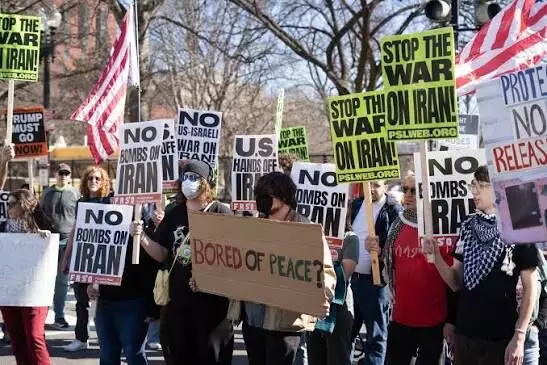
The second week of the West Asian crisis has revealed not just the persistence of violence but also the widening contradictions at its core. Iranian President Masoud Pezeshkian’s three conditions — recognition of Iran’s rights, reparations, and international guarantees — sound like a roadmap to peace. Yet, even as these demands were voiced, Iran continued missile strikes on shipping lanes, energy infrastructure, and neighbouring states. Oil prices surged past $100 a barrel, Israel expanded its strikes into Lebanon, and the United States vowed to “finish the job”. The war is escalating, not receding.
The questions are unavoidable. If reparations are demanded, who will calculate the damages? Will it be the UN, which has failed to enforce reparations in past conflicts such as Iraq–Kuwait? Or will it be left to bilateral negotiations where power, not justice, decides the outcomes? And if Iran insists on guarantees against future aggression, can the US and Israel ever agree to limit their military options in a region where deterrence is their primary strategy?
President Trump’s insistence on “finishing the job” raises another dilemma: what exactly is the job? Is it regime change in Tehran, neutralisation of Iran’s military capacity, or simply a demonstration of American resolve? Without clarity, the war risks becoming open-ended, draining resources and eroding domestic support. With approval ratings falling, how long can Washington sustain a costly conflict abroad when its own citizens question its purpose?
Israel’s wide-scale strikes on Iran and Hezbollah positions in Lebanon deepen the crisis. Does this broaden the war into a regional conflagration, or is it a calculated attempt to weaken Iran’s proxies before negotiations? And if UN Security Council resolutions are openly flouted, what remains of international law as a restraining force?
Iran’s posture itself is contradictory. Pezeshkian speaks of peace to Russia and Pakistan, yet missiles rain down on Jerusalem and Gulf states. Is Iran attempting to appear reasonable while maintaining pressure through force? Or is it signalling to allies that it will not compromise without extracting concessions?
The economic dimension cannot be ignored. Rising oil prices threaten global inflation, disrupt shipping, and destabilise markets. Will economic pressure force reluctant actors to the negotiating table, or will it harden positions further? History suggests both outcomes are possible: sanctions and oil shocks have sometimes compelled negotiation, but they have also entrenched defiance.
The crisis exposes the fragility of international institutions. Reparations and guarantees require trust, yet trust is absent. International law requires compliance, yet major powers disregard resolutions. Diplomacy requires restraint, yet restraint is nowhere to be found.
So the world must ask: is this war about rights and reparations, or about power and survival? If it is about rights, then Iran’s demands must be weighed seriously, with mechanisms for enforcement. If it is about power, then the conflict will continue until one side exhausts the other. Either way, the second week of this war has shown that peace is not imminent.
Until credibility, enforcement, and reciprocal restraint are established, Iran’s conditions risk becoming rhetorical markers in a conflict that shows no sign of ending. West Asia remains locked in a cycle of violence, and the global community must confront the uncomfortable truth: without genuine accountability, this war will not end — it will only mutate into new forms of instability.