When Nepal Outshone India in Beijing

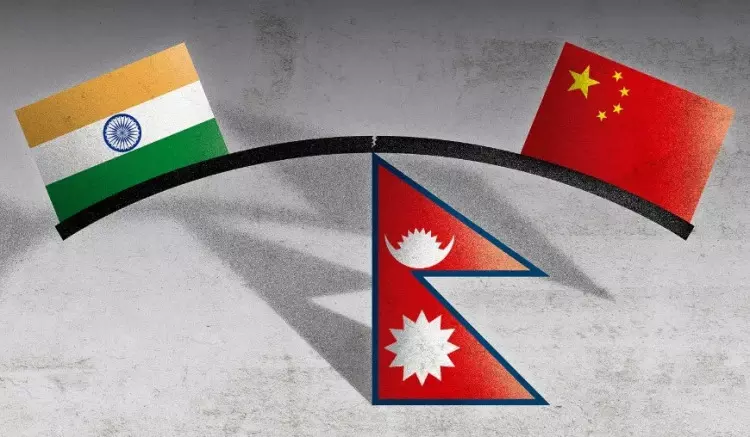
Beijing: China’s Victory Day parade last week was more than a ceremonial display—it was a carefully staged projection of hierarchy in the region. In that hierarchy, Nepal’s higher ceremonial honour over India was no accident. Beijing deliberately signaled Kathmandu as a trusted partner while underscoring that India’s balancing act with the West limits its reliability as a regional anchor.
Nepal’s Calculated Move
For Kathmandu, the gesture from Beijing reflects decades of careful strategic calculation. The 2015 blockade by India left a lasting scar on Nepal’s national psyche, reinforcing a narrative of India as a coercive “big brother.” The ongoing Kalapani-Lipulekh border dispute has further fueled perceptions of Indian expansionism, while China positions itself as a sympathetic interlocutor.
Nepal’s leadership is leveraging China’s ceremonial embrace to diversify its strategic dependence. Economically tied to India through open borders and remittances, Nepal seeks diplomatic autonomy through visible partnerships with Beijing. The Nepali Communist Party elite, ideologically aligned and financially supported by China, sees such engagements as domestic legitimacy boosters.
India’s Diplomatic Missteps
Delhi’s reactive approach to neighborhood policy has left India ill-positioned. When Nepal leaned toward Beijing, India’s response relied heavily on security posturing rather than proactive soft-power engagement. Overemphasis on border security—through the lens of internal challenges like Madhes politics and cross-border smuggling—has often overshadowed efforts to treat Nepal as a sovereign equal.
India also underestimated the significance of ceremonial diplomacy. While China meticulously manages optics to enhance prestige, India often downplays symbolic gestures—a critical misstep in relationships with smaller neighbors.
China’s Strategic Design
By elevating Nepal, Beijing is not immediately militarizing the relationship but is psychologically detaching Kathmandu from India’s orbit. Unlike Pakistan, Nepal is not inherently hostile to India. Yet, by creating a “prestige partnership,” China is subtly pressuring India along its vulnerable Himalayan frontier. Beijing positions itself as a guardian of smaller states’ dignity, contrasting India’s perceived heavy-handedness in the neighborhood.
The SCO Context
The parade coincided with the Shanghai Cooperation Organization (SCO) summit in Beijing, underscoring India’s regional challenges. Pakistan, despite economic instability, remains a core Chinese ally, while India often finds itself relegated to symbolic photo-ops. Highlighting Nepal during the parade extends Beijing’s broader message: India cannot claim uncontested primacy, even in its immediate neighborhood.
India’s Strategic Dilemma
Nepal’s tilt toward China creates a potential Himalayan encirclement for India—stretching from Tibet and Nepal to Pakistan. While India maintains significant soft power in Nepal through language, culture, and migration, this influence is being politically neutralized by inconsistent statecraft. Symbolic defeats—such as ceremonial precedence in Beijing—chip away at Delhi’s psychological dominance in South Asia.
Recalibrating India’s Approach
Analysts argue that India must:
Ditch the “Big Brother” Lens: Treat Nepal as an equal partner, not a protectorate.
Compete in Prestige Politics: Actively create platforms where smaller neighbors feel respected through summits, cultural exchanges, and symbolic gestures.
Balance Security with Sensitivity: Avoid letting internal security concerns overshadow broader neighborhood diplomacy.
Shape the Narrative: Project India not as a hegemon but as a benign anchor of stability, countering China’s transactional approach.
Nepal’s elevated ceremonial status in Beijing was not about parades—it was a statement of influence and regional rules. By positioning Kathmandu above Delhi, China signaled a crucial reality: India’s uncontested leadership in South Asia is no longer assured. For Delhi, the warning is clear: power can be lost not only in wars, but also in ceremonies.