Modi’s GST Address: A Strategic Economic Gamble Amidst Fiscal Federalism Challenges
PM Modi's GST reforms aim to simplify and revitalize India's tax system, but face criticism for not addressing states' fiscal concerns and potential implementation challenges.

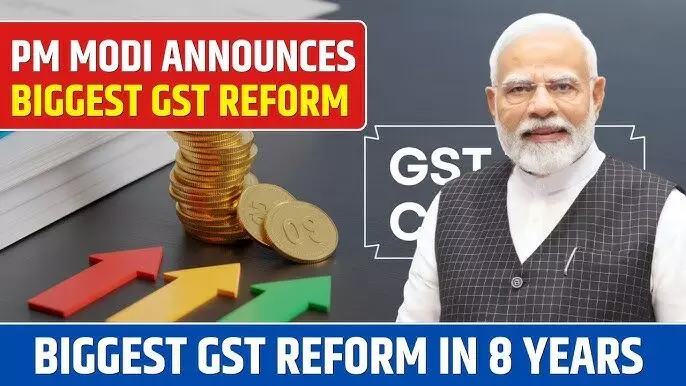
Prime Minister Narendra Modi’s address to the nation on September 21, 2025, announcing sweeping reforms to the Goods and Services Tax (GST) system, marks a pivotal moment in India’s economic policy landscape. Eight years after GST’s transformative introduction, the system remains a double-edged sword—lauded for unifying India’s fragmented tax regime but criticized for complexity, compliance burdens, and fiscal federalism tensions. Modi’s speech, delivered ahead of the new GST rates taking effect on September 22, 2025, is both a policy announcement and a political statement. It seeks to recast GST as a simpler, fairer, and growth-oriented tax regime while appealing to national pride through a ‘Swadeshi’ push. Yet, the address also invites scrutiny from economists, policymakers, business leaders, and citizens who must weigh its promises against past experience and emerging challenges.
The GST, introduced in 2017, was India’s most significant tax reform in decades, replacing a maze of central and state indirect taxes with a unified system. The journey began in 2000 under Prime Minister Atal Bihari Vajpayee, with the 122nd Constitutional Amendment Bill passed in 2016 enabling the GST Council’s formation. The Council, comprising central and state finance ministers, was tasked with deciding tax rates, exemptions, and compliance mechanisms. The initial GST framework featured four tax slabs (5%, 12%, 18%, and 28%) plus a compensation cess to protect states’ revenues during the transition.
Since 2017, GST has transformed India’s tax landscape, improving transparency, reducing tax cascading, and formalizing the economy. However, it has also faced criticism for complexity, high compliance costs, and revenue shortfalls, especially for states. The GST Council has continuously refined the system, including rate rationalization and digitalization efforts like e-invoicing. By 2025, the government’s focus has shifted to simplifying the structure further, reducing the number of slabs, and addressing long-standing demands from industry and states.
PM Modi’s September 21 address is a culmination of these efforts, announcing a simplified two-slab GST structure (5% and 18%) covering 99% of items, with a 40% slab for luxury and sin goods. This reform is the most significant since GST’s inception and comes amid economic headwinds, including global tariff tensions and domestic inflation concerns. The speech is also politically charged, as it precedes state elections and seeks to reinforce the BJP’s narrative of economic stewardship and self-reliance.
Key Announcements and Policy Shifts: What Was Said?
PM Modi’s address highlighted several major reforms:
Simplified Tax Structure: The new GST framework reduces the four existing slabs to two primary rates—5% and 18%—plus a 40% rate for ultra-luxury and sin goods. This simplification aims to reduce complexity, improve compliance, and make taxation more transparent.
Focus on Affordability: The reforms target everyday essentials, reducing tax rates on household goods, medicines, and agricultural inputs. For instance, soaps, toothpaste, packaged foods, and farm machinery will see reduced rates, benefiting the poor, middle class, and farmers.
GST Savings Festival: Modi announced a “GST Bachat Utsav” starting September 22, coinciding with Navratri, to celebrate the savings from reduced tax rates. This initiative is designed to boost consumption and economic activity.
Promotion of ‘Swadeshi’ Goods: Emphasizing self-reliance, Modi urged citizens to buy Made in India products, arguing that India’s prosperity depends on supporting domestic manufacturing. He also called on state governments to foster investment and manufacturing under the ‘Atmanirbhar Bharat’ campaign.
Support for MSMEs: The reforms aim to reduce compliance costs and tax burdens on Micro, Small, and Medium Enterprises (MSMEs), recognizing their critical role in job creation and economic growth.
Digital and Compliance Enhancements: The government plans to leverage AI-driven audit systems, real-time tracking, and simplified invoicing to improve tax compliance and reduce evasion.
Economic Implications: What Does It Mean for Growth, Inflation, and Fiscal Health?
The GST reforms’ economic impact is multifaceted:
Macro Level: The simplified GST structure is expected to boost GDP growth by reducing compliance costs, improving tax collection efficiency, and stimulating consumption. The RBI and IMF projections suggest that GST rationalization could add 0.5-1% to GDP growth over the medium term. The reforms may also help mitigate inflationary pressures by lowering taxes on essential goods.
Micro Level: Small businesses and traders will benefit from reduced tax rates and simplified compliance, potentially increasing their competitiveness and formalization. Consumers will enjoy lower prices on essential goods, increasing household savings and spending power.
Sectoral Impact: The logistics sector has already benefited from GST by eliminating check-posts and reducing transit times. Exporters, however, have faced challenges with refund delays and compliance issues, which the reforms aim to address. The agriculture sector stands to gain from lower tax rates on farm machinery and inputs.
Fiscal Federalism: The reforms could reduce states’ revenue autonomy further, as the GST Council’s centralized decision-making limits their ability to set tax rates independently. While the compensation mechanism has eased tensions, its expiration in 2022 left some states financially vulnerable. The new reforms do not explicitly address states’ demands for extended compensation, which could exacerbate federalism tensions.
Political and Governance Angle: Who Wins, Who Loses?
PM Modi’s address is a strategic political move:
BJP’s Narrative: The speech reinforces the BJP’s economic messaging ahead of elections, positioning the government as pro-growth, pro-business, and pro-consumer. The emphasis on self-reliance and ‘Swadeshi’ goods aligns with the party’s nationalist ideology.
Opposition Criticism: The Congress party and other opposition groups have slammed the reforms as inadequate, calling them a “band-aid” that fails to address the deep wounds inflicted by GST’s initial implementation. They demand an apology for past GST policies and an extension of compensation for states.
Public Opinion: The reforms’ success in reducing prices and simplifying compliance could improve the government’s popularity among the middle class and business communities. However, any perceived failure to address states’ concerns or implementation challenges could erode support.
Federalism Tensions: The GST Council’s structure, where the central government holds significant voting power, has led to accusations of centralization. States, especially those with strong manufacturing bases, feel their fiscal autonomy is constrained. The reforms do little to address these concerns, potentially deepening divides.
Implementation Challenges and Risks: What Lies Ahead?
The reforms face several hurdles:
IT Infrastructure and Compliance: The digital systems supporting GST, including e-invoicing and AI audits, must handle increased complexity and scale. Any glitches could disrupt business operations and tax collection.
State Cooperation: The reforms require coordinated action between the center and states, which have differing economic priorities and political affiliations. The lack of consensus on compensation and revenue sharing could hinder smooth implementation.
Taxpayer Awareness and Education: Ensuring that businesses and consumers understand the new rates and compliance requirements is critical. Poor awareness could lead to confusion, disputes, and non-compliance.
Revenue Neutrality and Fiscal Impact: While the reforms aim to simplify and reduce tax burdens, they could cause short-term revenue dips for states dependent on GST collections. The central government’s compensation pledge may not fully offset these losses.
Unintended Consequences: The reforms could create sectoral distortions, black market growth, or compliance loopholes, especially if enforcement is weak.
Forward-Looking Recommendations: What Further Reforms Are Needed?
To make GST truly efficient and equitable, the following steps are recommended:
Single-Rate GST: Consider moving toward a single-rate GST to eliminate complexity and compliance burdens, with targeted exemptions for essential goods.
Enhanced State Compensation Mechanisms: Introduce a permanent revenue-sharing formula that compensates states for revenue losses and incentivizes compliance.
Strengthened Digital Integration: Invest in robust IT infrastructure and AI-driven compliance tools to reduce evasion and improve transparency.
Federalism Reforms: Empower states with greater voting power in the GST Council and allow limited flexibility in tax rates to address regional economic disparities.
Public and Business Education: Launch nationwide awareness campaigns to educate taxpayers and consumers about GST changes and benefits.
A Bold Step with Cautious Optimism
Prime Minister Narendra Modi’s September 21, 2025, address on GST reforms presents a bold vision to simplify and revitalize India’s tax system. The reforms promise to reduce tax burdens, promote self-reliance, and accelerate economic growth. They are well-timed to capitalize on festive season consumption and political momentum ahead of elections. However, the reforms also face criticism for not fully addressing states’ fiscal concerns and potential implementation challenges.
Economically, the reforms are likely to boost GDP growth, reduce inflation, and improve compliance, benefiting businesses and consumers alike. Politically, they reinforce the BJP’s narrative but risk exacerbating federalism tensions. The success of these reforms hinges on effective implementation, state cooperation, and continuous dialogue between the center and states.
In sum, Modi’s GST gamble is a significant step toward a more efficient and equitable tax system, but its full potential will depend on how well the government navigates the complex economic, political, and federalism challenges ahead. The reforms deserve cautious optimism—applauded for their vision but critiqued for their limitations, with a call for further refinements to achieve a truly transformative GST regime.