Special Intensive Revision (SIR): A Constitutional Necessity or a Political Instrument!
Explore the controversy surrounding India's Special Intensive Revision (SIR) of electoral rolls, its implications on voter rights, and the Election Commission's stance.
What is Special Intensive Revision (SIR)?
Special Intensive Revision of Electoral Rolls is a large-scale, document-based voter verification exercise conducted by the Election Commission of India (ECI) to update, authenticate, and purify electoral rolls across multiple states and union territories. It aims to ensure that only eligible Indian citizens remain registered voters. But as the 2025 rollout unfolds across 12 states and 3 union territories, the exercise has sparked both administrative praise and political controversy, raising questions about its timing, transparency, and impact on voter rights.
Special Intensive Revision is not a routine update. It is a targeted clean-up and verification campaign launched under the powers granted by Article 324 of the Constitution, Section 21 of the Representation of the People Act, 1950, and the Registration of Electors Rules, 1960. Unlike annual revisions, SIR involves house-to-house enumeration, document verification, and removal of ineligible entries. The 2025 phase covers nearly 51 crore voters in Tamil Nadu, West Bengal, Kerala, Uttar Pradesh, Madhya Pradesh, Rajasthan, Chhattisgarh, Goa, Gujarat, Puducherry, Andaman and Nicobar Islands, and Lakshadweep.
Election Commission on Special Intensive Revision (SIR)
The Election Commission argues that SIR is essential to address inflated or outdated rolls caused by migration, death, or duplication. It also aims to remove ineligible voters, including non-citizens and underage individuals, and to align voter databases with technological upgrades. However, critics point to the political and legal pressure surrounding the exercise, especially in states with upcoming elections. In Bihar’s earlier phase of SIR, over 68 lakh names were deleted, triggering legal scrutiny and public backlash. The ECI defended the move, citing the need for accuracy and fairness, but opposition parties and civil society groups raised concerns about disproportionate exclusion of certain communities.
Special Intensive Revision in West Bengal
In West Bengal, where assembly elections are due in 2026, SIR has taken on political significance. Booth Level Officers (BLOs) are conducting door-to-door verification, collecting filled-in forms and documents from voters. The process has drawn mixed reactions. While some parties support the clean-up as necessary for electoral integrity, others allege bias and mass deletion. The West Bengal Congress Committee has filed a petition in the Supreme Court, calling the exercise “arbitrary, impractical, and politically motivated.” CPI(M) leaders have accused the ECI of acting as a “bureaucratic bulldozer,” flattening voter rights under the guise of reform. [Also Read - Election Commission Orders Special Revision of Assam’s Electoral Rolls Ahead of 2026 Elections]
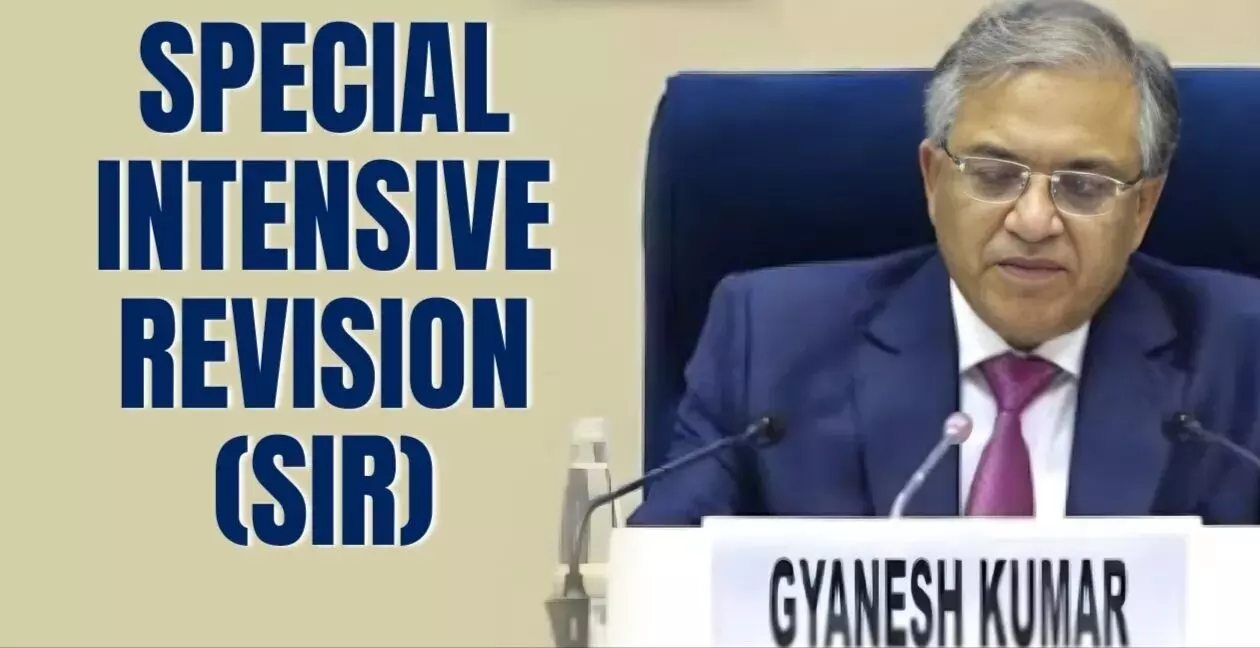
The contradiction between the ECI’s official statements and ground realities is stark. Chief Election Commissioner Gyanesh Kumar stated, “The SIR is a constitutional mandate to ensure only eligible voters are listed. It is not political—it is procedural.” Yet the cut-off date of January 1, 2026, for new voters in Bengal, just months before the assembly elections, has fueled suspicion that the revision is designed to shrink the electorate in opposition bastions. The lack of transparency in deletion criteria, absence of multilingual support, and digital overreach have created a climate of disenfranchisement.
Special Intensive Revision in Tamil Nadu, Kerala & Uttar Pradesh
Other states like Tamil Nadu, Kerala, and Uttar Pradesh are also undergoing SIR, with similar procedures. The ECI has issued detailed guidelines on acceptable documents, verification protocols, and grievance redressal mechanisms. However, reports from these states suggest confusion among voters, inconsistent implementation by BLOs, and limited awareness campaigns. In Tamil Nadu, voters are scrambling to submit old documents, fearing deletion. In Kerala, BLOs have faced resistance from communities wary of bureaucratic overreach. [Read - Special Intensive Revision of Electoral Rolls Begins Across Tamil Nadu Ahead of 2026 Assembly Elections]
Supreme Court Verdict on Special Intensive Revision (SIR)
The Supreme Court of India is currently hearing petitions challenging the pan-India SIR, especially its implementation in Bihar and other politically sensitive regions. The court has acknowledged the urgency of the matter, with hearings scheduled around key election dates. Justice Surya Kant remarked, “Transparency is not a choice—it is a constitutional obligation.” Advocacy groups like the Association for Democratic Reforms (ADR) have raised concerns about data integrity and the potential disenfranchisement of vulnerable populations. They have called for independent audits, public disclosure of deletion lists, and stronger grievance mechanisms.
For voters, the implications are immediate. Verification is mandatory in SIR-covered regions. Citizens must submit proof of age, address, and citizenship. BLOs will assist in form collection and clarification, but the burden of documentation lies with the voter. Digital tools like the Voter Helpline App and NVSP portal can be used to track status and file objections, but access and literacy remain barriers in many regions.
Final Thought
Special Intensive Revision is a constitutional and administrative necessity—but it must be implemented with transparency, inclusivity, and accountability. The integrity of the voter roll is not just a technical issue—it is the foundation of democracy itself. When revision becomes repression, and timing becomes tactic, the Election Commission risks becoming an instrument of regime preservation. The right to vote is sacred, and any exercise that threatens it must be scrutinized with vigilance and courage.